
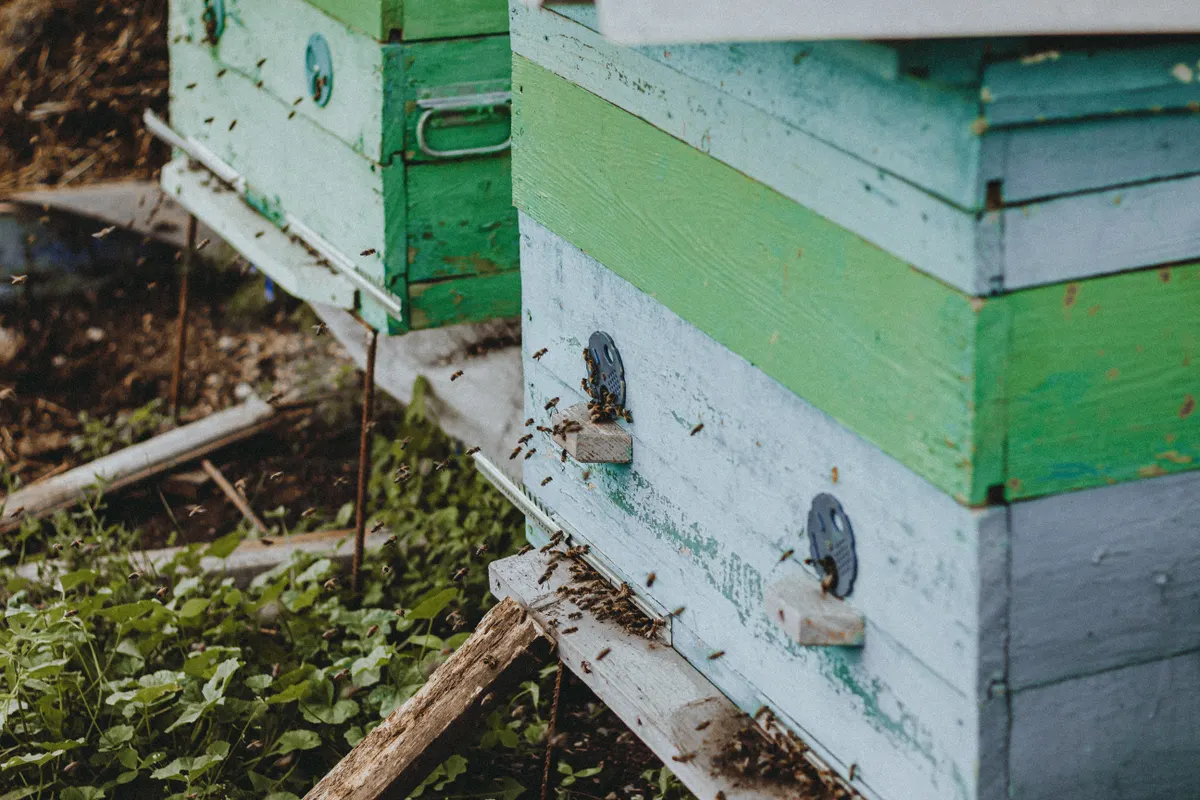

The West Virginia Supreme Court of Appeals has agreed to hear a challenge to the South Charleston beekeeping ban, placing a question of state preemption law at the centre of a dispute that began with one resident’s application to keep two honeybee hives at his home.
The South Charleston Beekeeping Ban and Its Legal Origins
The case dates to 2022, when M. Alex Urban applied for a permit to keep two honeybee hives at his South Charleston residence under the city’s existing ordinance governing the keeping of animals. The city refused the permit and subsequently enacted a complete ban on beekeeping in 2023, invoking its authority under West Virginia Code § 8-12-5(25), the municipal-enabling statute that allows cities to regulate animals.
Urban challenged the ban in the Kanawha County Circuit Court. On 23 January 2025, the circuit court granted summary judgment in Urban’s favour, finding that South Charleston had exceeded its authority. The court accepted the argument that West Virginia law assigns oversight of beekeeping to the West Virginia Department of Agriculture (WVDA), which had itself intervened in proceedings and obtained its own summary judgment against the city.
The city appealed. On 24 February 2026, the Intermediate Court of Appeals issued its memorandum decision in docket 25-ICA-51, reversing the circuit court and remanding with instructions to enter summary judgment in favour of South Charleston. The Intermediate Court held that bees are animals under the ordinary meaning of the word and that state law does not prevent cities from regulating beekeeping.
Preemption Arguments Before the Supreme Court
Urban’s petition to the Supreme Court of Appeals raises 11 assignments of error. The core contention is that the West Virginia Apiary Act (WV Code § 19-13-4), which requires every person keeping bees in the state to register with the WVDA within ten days of commencing beekeeping, effectively pre-empts local prohibition. Urban also relies on the Right to Farm Act and the Cottage Law Act, arguing that state law protects his right to produce and sell honey as a cottage industry.
Urban’s legal team further contends that the Intermediate Court erred by relying on dictionary definitions of the word ‘animal’ rather than statutory context, and by failing to construe the city’s municipal authority narrowly, as West Virginia law requires.
South Charleston’s city attorney counters that neither the Apiary Act nor the Right to Farm Act contains any express preemptive language, and that § 8-12-5(25) gives cities clear authority over animals, which bees plainly are. The city’s brief cites the risk to residents who are allergic to bee stings and the possibility that hives could attract predators, pointing to South Charleston’s characteristically small residential lots as context for the council’s decision.
Since the South Charleston beekeeping ban took effect in 2023, local hobbyist beekeepers have reportedly continued keeping hives covertly, deterred by the prospect of steep fines and potential imprisonment.
Briefing Schedule and Wider Legislative Context
The Supreme Court of Appeals has set a briefing schedule requiring Urban’s opening brief by 27 July, the respondents’ brief by 10 September, and any reply by 30 September, according to Legal Newsline.
The litigation sits alongside a parallel legislative effort. West Virginia beekeepers drafted a bill in 2026 that, if enacted, would restrict local beekeeping bans, eliminate certain licensing requirements, raise the legal threshold for nuisance complaints, and consolidate regulatory authority with the WVDA rather than individual municipalities. The bill has not yet been passed.
Whether that legislative proposal advances or not, the Supreme Court’s ruling will determine whether the state’s apiary registration framework and cottage-industry protections are powerful enough to displace a local prohibition, or whether towns and cities across West Virginia retain the authority to decide the question for themselves. Subject to any further proceedings, the outcome will bind every municipality in the state.
