
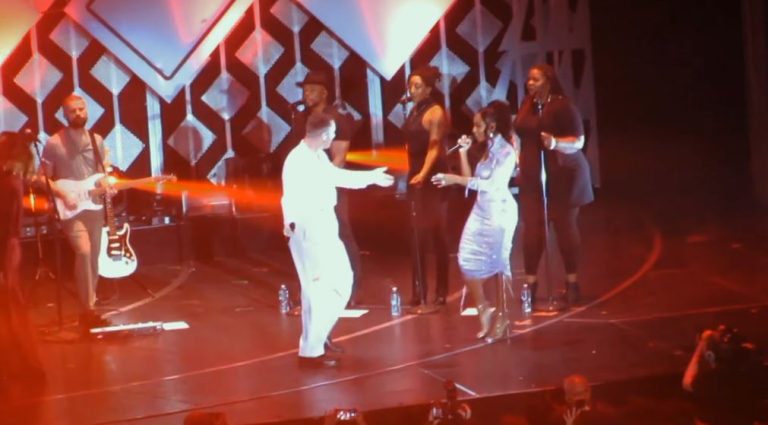
In a 27-page decision rendered in Los Angeles on Tuesday, U.S. District Judge Wesley L. Hsu rejected Smith and Normani’s request for summary judgment. Songwriters Jordan Vincent, Christopher Miranda, and Rosco Banlaoi filed the lawsuit in March 2022, alleging that their multi-platinum dance song stole its hook from a 2015 song they recorded under the name Sound and Color, which ironically has the same title.
The plaintiffs themselves acknowledged at some point during years of litigation that there is no concrete proof that anyone involved in making Smith and Normani’s rendition ever actually heard their song, which is what makes this lawsuit truly fascinating—and complex. That’s a big compromise. Access and copying typically go hand in hand in copyright law. In the absence of proof of access, the burden of proof shifts to the accusing parties, who must demonstrate that the two songs are so similar that copying is practically the only plausible explanation.
That argument did not seem ludicrous to Judge Hsu. He thought it was worthy of a jury, which is an important distinction. “The two songs should be presented to a ju
ry,” he said. It’s not a resounding endorsement of the plaintiffs’ case, but it’s also not a rejection. It is the court’s recognition that a reasonable audience listening to both tracks might hear something that calls for an explanation.
The defendants had also attempted a different strategy. The plaintiffs’ 2015 song, according to their attorneys, contained unapproved samples of “The Ha Dance” by Masters at Work and “Think (About It)” by Lyn Collins, depriving it of copyright protection in the allegedly copied passages. It’s a cunning legal strategy that, if successful, can subtly undermine a plaintiff’s case. Hsu, however, was not convinced. He pointed out that the plaintiffs’ track contained so few samples that the average listener would probably overlook them completely. A jury will now consider that question, along with many other issues in this case.
It’s important to take a step back and think about the kind of territory this case is venturing into. From “Blurred Lines” to Ed Sheeran’s legal battle over “Thinking Out Loud” to the ultimately resolved dispute surrounding Taylor Swift’s “Shake It Off,” music copyright litigation has been transforming the industry for years. Seldom do these cases go to trial. They dissolve silently, settle, or are tossed. This decision affects more than just Smith and Normani because a full jury trial over a big pop hit is actually rather uncommon.
For the plaintiffs, the decision is a sort of affirmation of their right to be heard rather than their final claim. Alfred J. Fluehr, their lawyer, said in a statement that his clients were “gratified” that the court acknowledged the need for a jury. Given how frequently this case has fluctuated between dismissal and revival since 2022, it’s possible that gratitude also brings some relief.
Smith and Normani, as well as Universal Music Group, still insist that they wrote the song on their own. From the outside, it’s difficult to determine whether that’s completely true, partially true, or legally true in the way that matters. The music industry rarely discusses this kind of uncertainty in public. Songs have an impact on one another. DNA is shared by hooks. Courts have never really been able to draw a clear distinction between infringement and inspiration.
Whether a settlement is reached before a trial date is set will determine some of what happens next. Statistically speaking, that is the most likely result. If it doesn’t, however, a jury will eventually have to sit down, listen to two songs that share the same name, and determine whether or not one of them borrowed too much from the other. It’s not an easy task. It never is.