
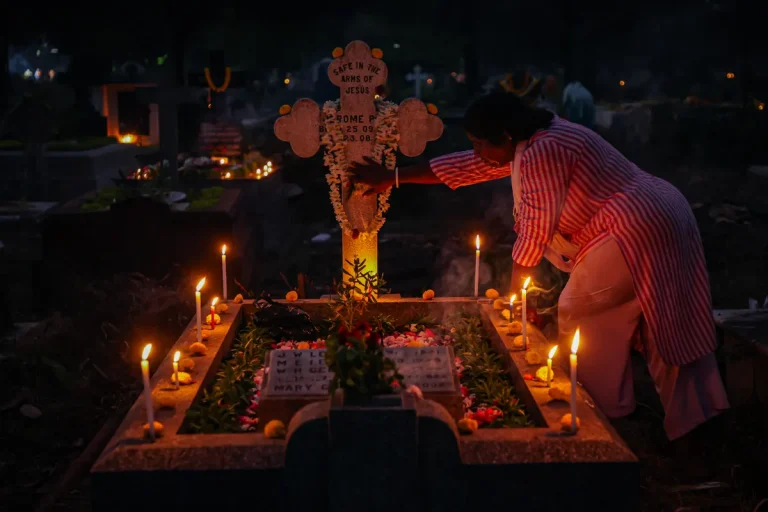
The day, first established in 2017 under General Assembly Resolution 72/165, is observed to honour survivors of terror attacks and promote their human rights. This year’s commemoration carries the theme ‘Healing through Memory,’ which the UN describes as highlighting how preserving victims’ stories and honouring those lost can uphold dignity, foster recognition, and inspire hope.
VoTAN and the UN Terrorism Victims Online Briefing Paper
The initiative centres on the Victims of Terrorism Associations Network (VoTAN), which was formally launched on 28 April 2025 at United Nations Headquarters in New York. VoTAN emerged as a key outcome of the first UN Global Congress of Victims of Terrorism in 2022, designed to give victims, survivors, and civil society organisations a structured forum for advocacy and mutual support.
The network now connects 120 victims and victims’ associations across 40 countries. It is governed by a victim-led Steering Committee with regional representation spanning Europe, North America, South America, Africa, the Middle East, and Asia-Pacific. Approximately 43% of current members come from Europe, 20% from the Middle East and Africa, 20% from Asia, and 16% from the Americas.
VoTAN’s development was supported by a financial contribution from the Kingdom of Spain and is sustained through 2026 with backing from the German Federal Foreign Office.
The briefing paper released at the commemoration is entitled ‘Building a Safer Internet for Victims of Terrorism.’ Alexandre Zouev, Acting Under-Secretary-General for Counter-Terrorism, set out its purpose in plain terms: ‘Drawing directly on lived experiences of victims and survivors, it offers recommendations to governments, technology companies, and civil societies to help create digital spaces that protect rather than re-traumatise those affected by terrorism.’
Platform Design Changes and the Golden Hour Protocol
The paper’s recommendations move well beyond basic content removal. Dr Maysoon Salama, Manager of An-Nur Child Care Centre, explained how algorithmic recommendation systems actively push graphic content to users as trending news long after an incident has faded from the headlines.
Beyond unwanted exposure to footage, victims face deepfake creation, manipulation of recorded events, and content that shows support for perpetrators, thereby distorting and denying victims’ accounts. Odette Chesnot, a psychologist and founder of the Lebanese Association of Victims of Terrorism, noted that social media attacks on victims and their families can reactivate trauma and disrupt recovery.
At present, the responsibility for cleaning up harmful digital content falls largely on victims themselves. VoTAN’s briefing paper proposes structural remedies embedded in platform design rather than after-the-fact moderation.
Among the recommended features are priority reporting channels and a protected status for verified victims, allowing them to bypass automated bots and reach human moderators trained in trauma-informed content handling. The paper places particular weight on protections in the period around attack anniversaries, when algorithmic amplification of extremist content and the monetisation of violent material are at their peak.
A further proposal is the Golden Hour Protocol: pre-arranged crisis response arrangements activated in the immediate aftermath of an attack to distribute verified information rapidly, preventing algorithmically-spread misinformation and deepfakes from taking hold before accurate accounts can circulate.
UNOCT, working with VoTAN members, has identified four interlinked areas where digital tools can better serve terrorism victims: providing services, supporting justice and accountability, protecting against revictimisation, and fostering peer support and empowerment. The VoTAN launch earlier this year laid the groundwork for exactly this kind of structured, victim-led pressure on platform operators.
Whether technology companies adopt any of the recommended design changes voluntarily, or whether governments move to embed them in regulatory frameworks, will determine how far the initiative translates into enforceable protection for survivors in the near term.