

A certain type of political setback occurs when a calendar slowly grinds against a judicial schedule rather than in a single dramatic moment. That kind of story now surrounds the Virginia Democrats’ quest to change the state’s congressional district for the 2026 midterms. Regardless of the outcome of the U.S. Supreme Court’s decision regarding the Democrats’ emergency appeal, Governor Abigail Spanberger stated on Thursday that the 2026 elections in Virginia will be conducted using the current 2021 court-drawn map, as most observers had already started to assume. The legal battle is still ongoing. For this cycle, the practical battle seems to be ended.
Here, the path has been abnormally compacted. In response to severe Republican gerrymandering in other Southern states, more than three million Virginians voted in April on a constitutional amendment that would have permitted the state to redraw its congressional map. The modification was approved.
The Virginia Supreme Court then declared the entire referendum process “null and void,” finding that it had not complied with state constitutional provisions regarding how amendments must be enacted, in a 4-3 verdict that shocked many in Richmond. It is, of course, up to the individual to determine whether that decision was a politically advantageous one or a clear interpretation of the law. The court’s division was small enough to imply that the issue was actually disputed.
| Information | Details |
|---|---|
| State | Virginia |
| Governor | Abigail Spanberger (D) |
| Current Congressional Delegation | 6 Democrats, 5 Republicans |
| Proposed New Map Outcome | Potential 10-1 Democratic advantage |
| Map Currently in Use | 2021 court-drawn map |
| Referendum Date | April 2026 special election |
| Referendum Vote Count | Over 3 million Virginians |
| Referendum Result | Majority approval |
| Virginia Supreme Court Ruling | 4-3, declaring referendum “null and void” |
| Map Change Deadline (State) | May 12, 2026 |
| Pending Court | U.S. Supreme Court |
| Justice Handling Application | Chief Justice John Roberts |
| Triggering Federal Decision | Callais ruling, gutting parts of the Voting Rights Act |
| Plaintiff Goal | Pause state high court ruling, allow new map |
| 2026 Election | Will proceed under current map |
| Broader Context | Mid-decade redistricting fights across the South |
| Spanberger’s Position | Disappointed, focused on winning under existing lines |
Practically speaking, the proposed Democratic map would have changed Virginia’s congressional delegation from its present 6-to-5 Democratic advantage to something more like 10-to-1. That is not a slight alteration. A four-seat swing from a single state can decide which party controls the U.S. House, where majority control has frequently depended on a small number of members. In essence, the Democrats’ map was their response to Republican gerrymandering in the middle of the decade, which was an effort to redraw the laws in a state that was friendly in order to counteract what was occurring in Texas, Florida, North Carolina, and other states. That door was shut, at least temporarily, by the state Supreme Court’s decision.
A halt to that state court decision is requested in the emergency appeal that is currently on Chief Justice John Roberts’ desk. Roberts’ decision to give Republican opponents until Thursday night to reply is an example of an administrative action that shows thorough consideration but no clear preference.
In general, the U.S. Supreme Court has been hesitant to get involved in state constitutional disputes involving redistricting, especially after the state’s top court has made a definitive ruling. Most predictions concerning Roberts’ actions are based on conjecture. However, Spanberger’s statement, which was made before to the federal response, implies that even the state’s ruling Democrats no longer saw intervention as a viable option.
Spanberger spoke in a methodical, even cautious manner. Despite the fact that Virginia’s May 12 deadline for map modifications had already passed, she referred to the appeal as “important” nonetheless. “When it comes to the execution of elections, no matter the outcome in that case, we will be running our elections beginning next month with early voting on the current maps that we have,” she said to reporters. It was the kind of statement a governor might make when attempting to convey both operational realism and legal persistence—two concepts that are sometimes difficult to reconcile in one sentence.
All of this has a larger context that is worth considering. An already aggressive wave of mid-decade redistricting in Republican-led Southern states was accelerated by the Supreme Court’s Callais ruling earlier this term, which significantly undermined important Voting Rights Act protections. Redrawings of maps that were deemed settled until 2030 are currently underway. Up until April, Democrats believed that the amendment enacted by the voters in Virginia was the most legal way for them to retaliate. Democrats are now looking for procedural counterpunches in places where they have less political clout because the state Supreme Court’s decision essentially eliminated that lever.
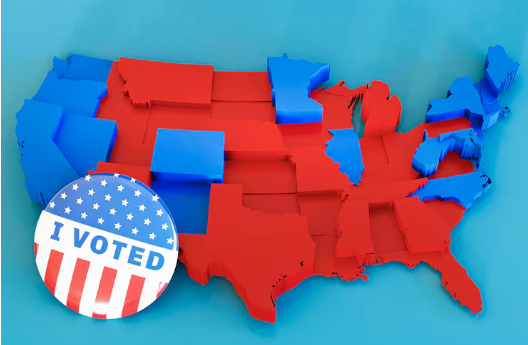
The entire sequence has a subtly depressing quality that Spanberger admitted. In the referendum, three million people cast ballots. It was accepted by the majority. The outcome was later declared unlawful on procedural grounds by the state’s highest court. She stated, “What needs to happen is we need to focus on the task at hand, which is winning races in November,” before stating that elected leaders must keep reminding voters that their engagement is still important. In a way, that second section was the line that revealed more. The political landscape has obviously changed when a governor has tell her constituents that their votes still matter.
Following the election in November, the matter will proceed via the legal system. The calendar has resolved the immediate matter of who would control Virginia’s congressional districts in 2026, regardless of the Supreme Court’s final decision. It’s difficult to ignore how frequently contemporary American election disputes are resolved in this manner when observing this from outside the courtroom. The time between the filing of a lawsuit and the deadline for printing ballots, rather than a final decision on the merits. In this instance, the merits may take years. For this cycle, the map has already been established.
