
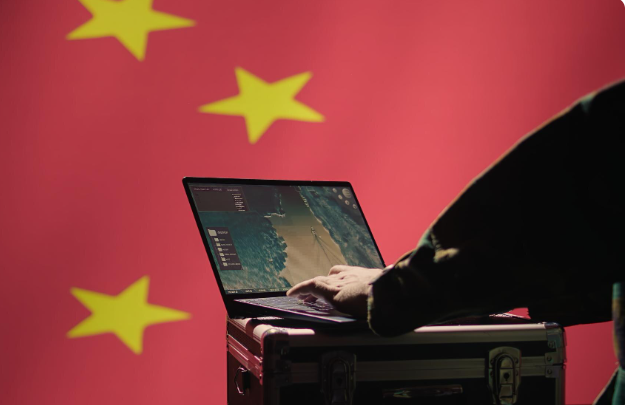

The office lights in tech parks remain on well after midnight on a hot Shenzhen evening. Driven by ambition and delivery boxes, engineers move between whiteboards covered with neural network diagrams. Outside, glass structures bearing logos that were politically vulnerable not long ago are zipped by electric scooters. The tech industry in China is reviving.
Investors have come back after years of regulatory crackdowns that cut the wings of billionaire founders and caused share values to plummet. It has sprung back quickly, almost defiantly. Startups in AI are raising capital. The goals for chip manufacture are being raised. Rekindled hope has caused the shares of industry titans like Tencent and Alibaba Group to rise. The rally feels different this time, though. Beijing could desire expansion, but not a flurry. And that difference counts.
| China Tech Rally Snapshot | |
|---|---|
| Key Drivers | AI development, semiconductor self-reliance |
| Major Companies | Alibaba Group; Tencent; Meituan |
| Emerging AI Players | DeepSeek |
| Government Focus | Chip output expansion, AI self-sufficiency |
| Market Hubs | Shenzhen; Beijing |
| Reference |
One national mission—technological self-reliance—is contributing to the rise. Chinese policymakers have stepped up their efforts to produce AI and chips domestically as a result of U.S. export restrictions that restrict access to advanced semiconductors. According to reports, official goals for 2026 call for tripling the output of specific AI chip types. The reasoning is simple among Beijing government ministries. Manage your supply chains. Diminish susceptibility. Create important domestic industry.
But policy memos rarely influence the markets as quickly. Tech shares have seen an influx of hot money that occasionally surpasses government comfort standards. Regulators have issued warnings against excessive speculation and modified margin requirements. Authorities seem to prefer controlled, steady expansion over a speculative bubble that would upset the larger financial system. On trading screens, the anxiety is evident. Abrupt pullbacks follow sharp rallies. Warnings clash with enthusiasm.
The worst of the crackdown era appears to be past, according to investors. Beijing fined platform companies, changed the regulatory landscape, and reduced the power of digital billionaires between 2020 and 2022. Confidence was disturbed by those actions. The message has now become more gentle. The government seems to understand that technology is too significant to be permanently suppressed. However, assuming complete liberalization would be naïve.
Beijing’s strategy aims to align tech power with state interests rather than dismantle it. Semiconductors and AI are strategic. Fintech dominance and social media influence are less so. The ground becomes uneven as a result of that selective encouragement.
Consider Meituan, whose stock fell precipitously in the middle of 2025 in spite of general confidence in the IT industry. There is still intense competition. In the very competitive Chinese market, profit margins swiftly contract. Not all businesses gain from the AI story in the same way.
Meanwhile, cost-effective models from AI startups like DeepSeek have made headlines and challenged Western dominance. Comparisons are unavoidable in Silicon Valley and Shanghai venture capital circles. As this is happening, it seems like ambition and anxiety are driving China’s IT recovery. desire to take the lead in AI. Fear of slipping behind.
The story is complicated by the larger economy. China has recovered unevenly from the pandemic. The real estate markets are still brittle. One persistent issue has been youth unemployment. In light of this, euphoric tech stocks may seem divorced from the reality of the actual economy.
Whether this surge is a sign of long-term growth or just another cycle of speculation is still up in the air. Beijing stepped in during previous surges when instability jeopardized stability. These strategies are still available: restricting fund acquisitions, increasing liquidity, and encouraging state-owned institutions to participate in stable markets.
The relationship with the United States is still uncertain. Overnight changes in market attitude could be caused by new export restrictions or diplomatic tensions. Growth is valued by markets, but they also dread shocks.
Young founders’ quiet confidence is evident when strolling through an accelerator space in Shenzhen. They talk more about the effectiveness of model training and less about regulatory anxiety. While mentioned, the crackdown era is not discussed in detail. That change might be the most noticeable. The industry has changed.
A demonstration that Beijing cannot completely control has a contradictory quality. The government directs financial flows, distributes subsidies, and establishes industry priorities. However, markets create momentum on their own. Fear, hope, and speculation are forces that go beyond declared policies.
This might be the new balance: a tech sector that is supported but closely watched, ambitious yet limited. China’s government is aware of the strategic importance of AI leadership. Investors are aware that returns are driven by high-growth tales. Volatility exists between such forces.
The recovery continues as engineers work on models in high-rise labs and displays flicker in late-night trading rooms. not uncontrolled. Not fully guided. Momentum has a life of its own, even in a system that is strictly controlled. It is just quick enough to thrill markets and unpredictable enough to remind everyone of this.
