
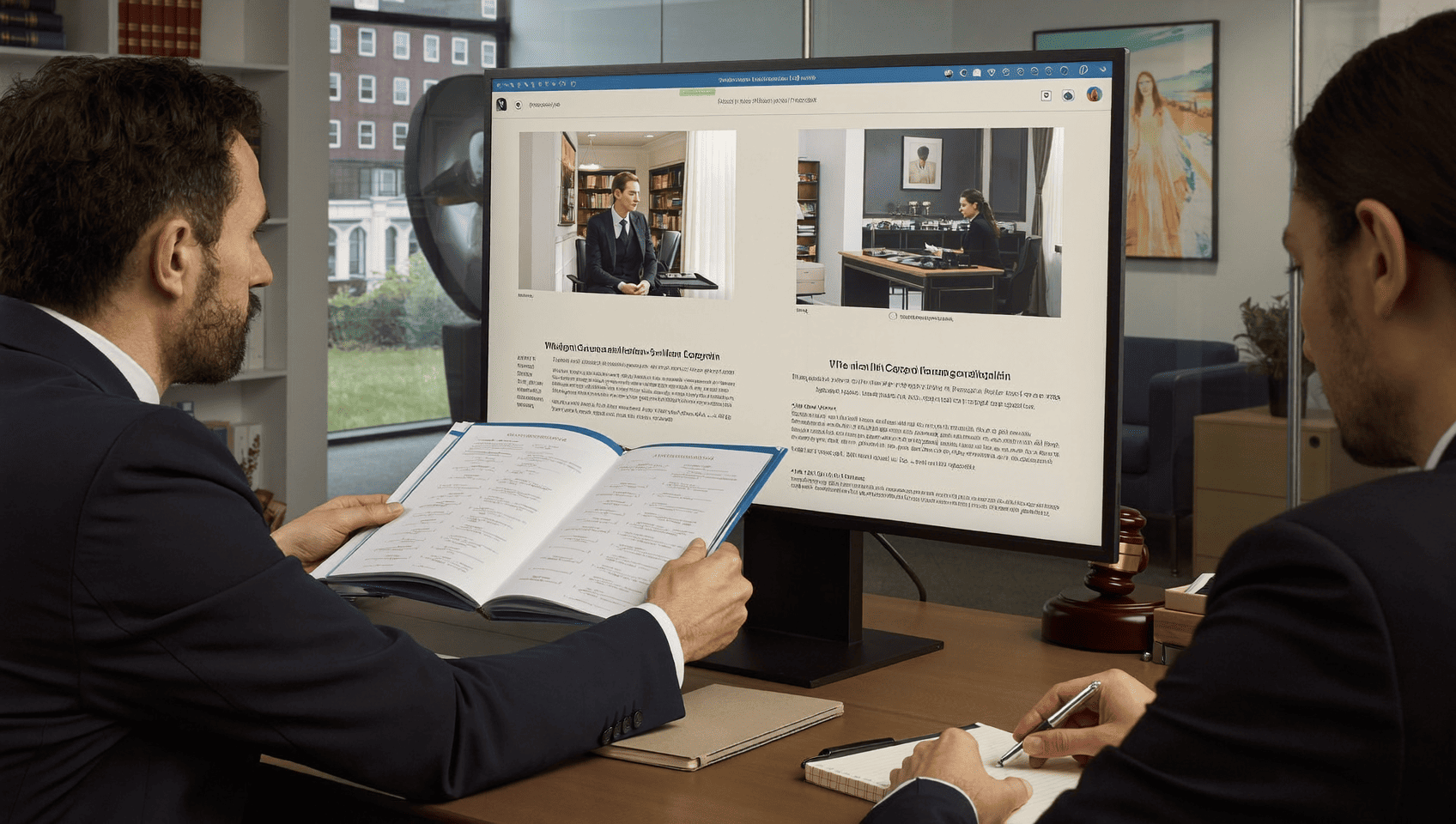

Open the websites of five high street
firms in any English town and the exercise becomes depressing quickly.
A handshake. A set of scales. Somebody in
a suit looking purposefully at a laptop. A column, or a courtroom, or a pile of
leather-bound books nobody in the building has opened this decade.
And on at least one of them, a gavel,
which is not used in courts in England and Wales and never has been. It is an
American object that arrived through television, and a firm displaying one is
telling anybody who notices that nobody checked.
That sameness is not a failure of
imagination. It is what happens when marketing sits with whoever has time, the
budget is modest, and the rules governing what a regulated firm may say are
genuinely restrictive.
AnAI Ad Generator changes what a small firm can
produce. With advertising creation tools at Higgsfield, businesses can develop
promotional visuals more efficiently. The constraints that matter most are
regulatory rather than creative, and those come first.
Why does every firm look
identical?
Because the same handful of stock
categories exist and everybody shops in them.
Search for legal imagery in any library
and you get scales, gavels, columns, handshakes, suited figures and law books.
Those are the available options, so those are the options every firm uses,
which produces a market where no firm’s marketing distinguishes it from any
other.
There is a second cause, which is
caution. Regulated firms are reasonably wary of saying anything that might
stray into territory the rules restrict, and the safest thing to say is
something generic.
The result is a sector where the
marketing of a specialist clinical negligence practice looks substantially the
same as a conveyancing outfit two streets away.
Which is a problem, because the client
choosing between them has almost nothing to go on and will frequently default
to whoever appears first in search.
Which rules actually govern
what a firm can say?
More than most marketing people assume,
and the specifics are worth knowing rather than guessing at.
Firms in England and Wales are regulated
by the SRA, with a Code of Conduct requiring that communications are accurate
and not misleading. Scotland and Northern Ireland have their own regulators
with their own requirements, which matters for any firm operating across
jurisdictions.
The SRA digital badge is required on regulated
firms’ websites, and complaints information including routes to the Legal
Ombudsman must be published.
Transparency rules require published
price and service information across several practice areas, which is covered
in its own section below.
And any accreditation claims must
actually be held, which is the point firms most often get wrong.
None of this prevents distinctive
marketing. It prevents inaccurate marketing, which is a considerably narrower
restriction than the sector behaves as though it is.
Does the transparency
requirement affect the creative?
More than firms treat it as doing, and it
is an opportunity rather than a burden.
The SRA transparency rules require firms
to publish price and service information for a defined set of practice areas,
including residential conveyancing, uncontested probate, certain motoring
matters, employment tribunal claims for unfair and wrongful dismissal,
immigration work excluding asylum, debt recovery below a threshold and
licensing applications.
Most firms satisfy this with a wall of
text on a page nobody reads, which complies and achieves nothing else.
The same information presented clearly
through an AI Ad Generator is genuinely useful to a client who is anxious about
cost, and cost anxiety is the single biggest reason people delay contacting a
solicitor.
A firm that presents its pricing clearly,
with the stages of the work laid out, is doing something its competitors are
technically also doing and visibly doing badly.
Check the current requirements rather
than working from an old summary, since the rules have been revised and the
scope matters.
What can never be claimed?
A short list and each item has caught
firms out.
Accreditations not held. The Law Society
runs specific quality schemes, and legal directory rankings are awarded rather
than assumed. Displaying a mark a firm does not hold is both a regulatory
matter and the easiest thing in the world for a competitor to check.
Outcomes. No firm can promise a result,
and creative implying one is a problem regardless of how it is phrased.
Specialist status without substance.
Describing a firm as an expert or specialist in an area invites the question of
what supports it.
Testimonials that are not genuine. Client
confidentiality means a real testimonial requires consent, which is a
conversation rather than an obstacle, and an invented one is a serious matter.
And anything suggesting a non-qualified person
is a solicitor, which applies to how staff are described in marketing as much
as anywhere else.
Should every practice area
share one look?
No, and this is where most firms miss the
easiest available improvement.
A commercial client instructing on a corporate
transaction and a person seeking advice after a bereavement are in entirely
different states of mind. Marketing that addresses both identically serves
neither.
Conveyancing clients want reassurance
about timescales and cost.
Employment clients are usually distressed
and often still in the job.
Private client work reaches people
dealing with death, which requires a register nothing else does.
Commercial clients want competence
signals and are largely unmoved by warmth.
Personal injury carries its own
regulatory layer and its own reputational history, which affects how the work
should be presented.
Producing distinct AI Ad Generator
material for each used to mean several design projects. That was the
constraint, and it is the one that has changed.
How careful does family law
need to be?
More careful than anything else a high
street firm does.
People contacting a family solicitor are
frequently in the worst period of their lives, sometimes in situations
involving safety, and almost always dealing with children.
Marketing that reads as adversarial is
both distasteful and increasingly out of step with a system that has moved
toward resolution rather than conflict.
Imagery requires particular restraint. No
children, for obvious reasons. Nothing depicting conflict. Nothing that would
be distressing to somebody encountering it while already distressed.
The AI Ad Generator register that works
here is calm and practical. What happens, how long it takes, who they will
speak to.
And for anything touching domestic abuse,
the considerations extend to whether material could be seen by somebody the
client lives with. Several firms now include a quick exit function on relevant
pages, which is worth considering.
Where does an AI Ad Generator
fit?
Producing the practice-area specific
material that firms have never been able to justify producing.
A firm with eight practice areas needs
eight distinct visual approaches, each in the formats its channels require.
That is a considerable number of assets, and historically the only affordable
answer was one firm-wide look stretched across all of it.
An AI Ad Generator removes the per-asset
cost that made that stretch necessary. The creative decisions still belong to
the firm, and the production stops being the obstacle.
An AI Ad Generator handles the format
problem too. Material running on a website, in search advertising, on social,
in print and on anything physical needs each in its own proportions, and
cropping one design into five shapes is how a firm’s marketing ends up looking
approximate.
Higgsfield sits around that as an AI
creative suite, holding the production and the stored approach together, which
matters because a firm’s marketing is frequently handled by whoever has
capacity that month.
The transparency material benefits most
from an AI Ad Generator, since presenting price and process clearly is both a
requirement and an opportunity almost nobody takes.
Does any of this reach the
referral sources?
Frequently not, and for a great many
firms referrals matter more than anything the marketing does directly.
A high street practice receives work from
estate agents, accountants, IFAs, other firms passing on conflicts, and former
clients. Those sources rarely see the website at all, and the material they do
receive is usually a business card and a verbal recommendation.
What helps them is something they can
pass on. A clear one-page explanation of what the firm does in a given area, in
a format an estate agent can forward to a buyer or an accountant can attach to
an email.
Most firms have nothing like that,
because producing a piece per practice area per referral type was never worth
the design cost. An AI Ad Generator changes that arithmetic, and the resulting
material is doing work in conversations the firm is not present for.
Referral arrangements carry their own
requirements. Any financial arrangement with a referrer has to be disclosed to
the client, and the rules on that are specific enough to be worth checking
rather than assuming.
Higgsfield keeping the practice area
material together means the version an estate agent receives matches the
version on the website, which sounds trivial and is the thing that makes a firm
look organised.
The same applies to anything used at
networking events or local business groups, where a firm is competing on
familiarity rather than on search position.
Can the people in the imagery
be generated?
No, and the reason is specific to
regulated professions.
Imagery depicting people as members of a
firm makes a representation about who works there. Generated figures presented
as solicitors are a misrepresentation, and a client meeting an entirely
different set of people has had an expectation set and broken.
Stock photography of models has long
occupied an uncomfortable middle ground here, and the sector’s drift toward
real photography reflects that.
Your actual solicitors, photographed
properly, are the stronger option anyway. Clients instruct people rather than
firms, and a face attached to a name does more than any amount of generic
imagery.
What an AI Ad Generator should produce is
everything around them. Graphic treatments, practice area framing, the visual
structure the firm’s own photographs sit inside, and the material explaining
process and cost.
Testimonials and case references stay
with the clients who gave them, with consent.
Is the firm’s own photography
worth the trouble?
Yes, and it is the single highest-return
thing most firms could do.
Photographs of the actual solicitors,
taken properly, in reasonable light. Not formal portraits against a backdrop,
which age badly and look like everybody else’s, but something recognisable.
The actual premises, including the
reception somebody will walk into. Clients are anxious about the first visit
and seeing where they are going reduces that.
And the team as it actually is, since a
firm’s size and character is information a client is trying to work out.
A day with a photographer produces
material a firm uses for years, and it costs considerably less than most firms
assume. For a high street practice it is probably the best marketing money
available.
Everything else can be produced. The
people and the building cannot.
What would one practice area
take?
In the afternoon, once the firm has
decided what it wants to say.
Write the client-facing explanation of
that practice area first. What happens, in what order, roughly how long,
roughly what it costs. That is the work, and most firms discover it has never
been written down plainly.
Check it against the current transparency
requirements if the area is covered by them.
Settle the register for that area in
Higgsfield. Calm and practical, or confident and commercial, depending on who
it addresses.
Produce the material in an AI Ad
Generator against that register, in every format the firm’s channels use.
Have somebody in the relevant team read
the Higgsfield output before it goes anywhere, because a conveyancer will spot
an inaccuracy a marketer will not.
Save the approach in Higgsfield so the
next practice area starts from something and the firm’s output stays coherent.
Conclusion
Legal marketing looks the same everywhere
because the available imagery is limited, the budgets are modest, and regulated
firms are understandably cautious about saying anything distinctive.
An AI Ad Generator removes the production
constraint, which means a firm with eight practice areas can address eight
different audiences properly rather than stretching one look across all of
them. Higgsfield keeping the approach stored means the material stays coherent
as it accumulates.
The rules restrict accuracy rather than
creativity, which is a narrower limit than the sector behaves as though it is.
And the gavel should go. It was never ours.
