

For Taco Bell, it has been a truly difficult period. The type of rough that includes federal lawsuits, an outbreak of a parasitic illness, two deaths in Michigan, and a separate class-action accusing the chain of putting half as much food in its Mexican pizza as the advertisements show is not the same as a bad earnings quarter or a menu item that failed. By October 2026, the company was dealing with simultaneous legal pressure from several sources, and the harm to its reputation had taken on a life of its own.
The larger of the two legal cases began in July. An outbreak of cyclosporiasis, a parasitic intestinal disease caused by Cyclospora that spreads through water contaminated with human feces during irrigation or food processing, was linked to shredded iceberg lettuce served at Taco Bell restaurants in several states. The outbreak was traced to a Taylor Farms facility in central Mexico. More than 4,100 laboratory cases were confirmed by the CDC, and another 7,400 needed more research. Over 11,000 cases were reported in Michigan alone. In Michigan, two people passed away.
Nearly immediately, Taco Bell, its franchisees (including Pacific Bells LLC and RoJo Foods LLC), and Taylor Farms were named as defendants in lawsuits that were filed in California, Michigan, Ohio, Pennsylvania, Missouri, and other states. The allegations covered everything from product liability and carelessness to implied warranty violations and misleading advertising. Attorneys calculated that victims might get between $20,000 and $1 million, depending on the severity, with death cases possibly reaching seven figures.
In response, Taco Bell voluntarily removed the impacted supplier’s lettuce from a few local supply chains, declaring that the company’s primary concern was the health and safety of its customers. The affected iceberg lettuce was voluntarily recalled by Taylor Farms, which also stated that it was looking into the cause of the contamination. Although the company was still being investigated, the FDA subsequently reported that one Taylor Farms lettuce sample had given a false positive for Cyclospora.
The lawsuits continued despite that disclaimer. New cases continued to be filed by August, including one from a couple from Rogersville, Missouri who filed in Webster County Circuit Court in October and another from a woman from western Pennsylvania who claimed to have eaten an avocado ranch chicken stacker and ended up in the hospital.
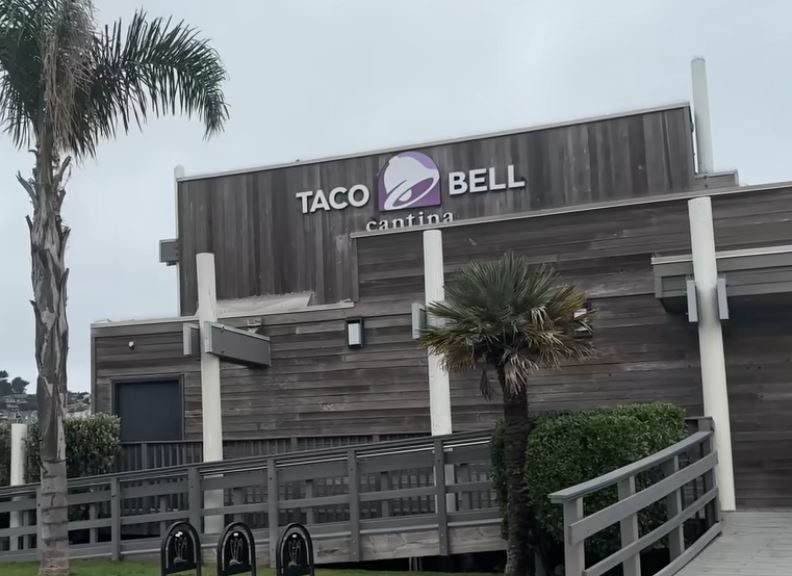
“By the time lettuce reaches a Taco Bell on Gratiot Avenue, whatever went wrong went wrong a long way upstream,” stated William Marler, a partner at Marler Clark and a food safety attorney. The Cyclospora parasite entered the supply chain at a sizable, centralized production facility in Mexico, made its way through a nationwide distribution network, and ended up in food that consumers in states like Michigan had no reason to suspect was tainted. This framing highlights an important point. The same point about scale was made by George Mason University food epidemiologist Amira Roess: when production is concentrated in a few large facilities, a single contamination event can quickly spread to a huge number of people.
Then, in October, an entirely different lawsuit was filed. Frank Siragusa, a New Yorker, filed a class-action lawsuit alleging that the $5.49 Mexican pizza he ordered from Taco Bell last September contained about half of the meat and beans depicted in advertisements. His lawyers claimed that the Grande Crunchwrap, the Veggie Mexican Pizza, and the Crunchwrap Supreme had all inflated their fillings by “at least double the amount.” Side-by-side photos of the advertized product and what customers actually received were included in the lawsuit.
The lawyers specifically pointed out that misleading customers about portions is particularly detrimental during a time when food prices are high. Siragusa is requesting $5 million in compensation. In the past, his legal team sued Burger King for false advertising regarding Whopper sizing; the case went to mediation but stalled. It’s possible that this one takes a similar route, but it’s difficult to ignore how the claim itself struck a chord with the general public.
An additional layer of unwelcome attention was introduced by the bean controversy. Over 13 million people watched a TikTok video uploaded by @ItzSleepyPanz, which showed a Taco Bell kitchen worker rehydrating what looked like dried, stringy scraps into refried beans by adding warm water. There were differing opinions. The procedure appeared typical for commercial food preparation, according to some viewers. Some were less understanding. In any case, it came at precisely the wrong time—during the coverage of the lettuce lawsuit—and Taco Bell had no clear response.
Observing all of this land at once gives the impression that the business is dealing with the compounded costs of issues that are actually distinct in origin but are almost impossible to distinguish in the public’s mind. A supply chain breakdown is caused by a parasite in the lettuce. A marketing issue accounts for half of the advertized beef. The preparation of dehydrated beans is a perception problem. They read as a whole. It remains to be seen if any of this eventually affects how people place an 11 p.m. Crunchwrap order. However, the cases are ongoing, the lawsuits are real, and the settlements, when they are reached, will be substantial.
