
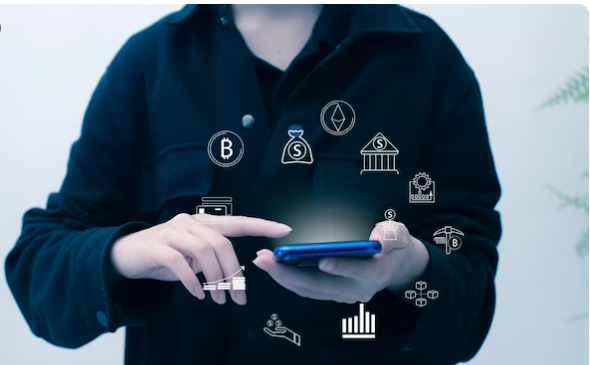

Nowadays, hardly anyone grabs for a real wallet on a packed London commuter train. Rather, displays illuminate—thumbs hover over biometric sensors, faces bend toward phones, and payment terminals chirp gently as transactions clear in less than a second. It’s easy to forget that a silent fight is going on behind the ritual since it has become so commonplace. There seems to be a turning point in the “Digital Wallet Wars.”
A wallet is preferred over traditional card payments by almost half of digital bank customers as of early 2026. Account-to-account transfers, commonly referred to as “Pay by Bank,” are quickly gaining traction in several regions of Europe, and many users want to continue with them due to their lower fees and real-time settlement. Nowadays, convenience isn’t the main consideration. The battleground is now trust.
| Category | Details |
|---|---|
| Tech Leaders | Apple Inc. (Apple Pay), Google (Google Wallet) |
| Major Banks | JPMorgan Chase, Capital One |
| Fintech Players | PayPal, Venmo |
| Key Trend | Account-to-Account “Pay by Bank” transfers |
| Projected Adoption | 60%+ global digital wallet usage by 2026 |
| Reference | https://www.visa.com |
The tech giants are on one side. Google and Apple Inc. are in charge of the operating systems, hardware, and user experience in addition to providing payment apps. By immediately integrating wallets into wearables and smartphones, they have established themselves as the gatekeepers of daily commerce.
Using Google Wallet or Apple Pay at a coffee shop is practically seamless. The experience seems to have been created by individuals who are fixated on motions and seconds. Investors appear to think that internet companies have a structural advantage because of their dominance in user experience. After all, rivals are compelled to use borrowed space when the wallet is housed within the phone’s core system. However, banks are not backing off in silence.
Capital and JPMorgan Chase In an attempt to turn their apps into financial “super apps,” one has been investing heavily in digital infrastructure. The plan is straightforward: become the main interface instead of the unseen plumbing that supports transactions. Banks highlight something that digital companies find difficult to match: decades of governmental scrutiny and a reputation for security, although with flaws. It seems like banks are embracing the story of stability. That lesson is relevant at a time of algorithmic errors and data breaches.
Fintech companies like PayPal and Venmo, on the other hand, function with a different energy. They thrive on flexibility, experimenting with social payment features and crypto integration that were previously written off as fads by traditional banks. With the aid of more transparent regulations in the US and Europe, stablecoins and tokenized payments are subtly growing, particularly in cross-border transactions.
One could sense the change this year when strolling through a technology conference hall. Booths no longer only promote “payments.” They promise ecosystems, including AI-powered budgeting tools, embedded loans, and loyalty integration. Hubs are emerging from wallets.
AI agents are starting to make purchases for users by 2026. Wallets are being reimagined to serve as verified middlemen, whether through sophisticated voice integrations or experimental shopping assistants. Payment networks are creating safe procedures to guarantee the legitimacy of these AI-powered transactions.
It is probable that the next line of battle will be drawn here. Who is in charge of that relationship if an AI plans your vacation or purchases your groceries? The assistant’s host tech company? Is the account being funded by the bank? Is the wallet verifying the transaction? In this situation, trust seems brittle.
The focus of fraud has moved upstream. By taking advantage of flaws in authentication systems, criminals target identities rather than just card numbers. Biometric verification, such as fingerprints and face scans, has so become commonplace. Customers are surprisingly receptive to it, giving up privacy in exchange for security.
Privacy problems still exist, though. Tech behemoths have come under fire for collecting data in various contexts. Even with strict regulations, scandals can still happen in banks. It’s difficult to overlook how both sides present themselves as protectors of your finances.
The economics behind the scenes are changing. As account-to-account payments circumvent conventional interchange fees, card networks are under pressure. Lower prices are welcomed by merchants. Speed appeals to consumers. Direct settlement presents an opportunity for banks. Owning the front door is an opportunity for tech companies.
One suspects that there won’t be a single winner when they watch things play out. Because of perceived security, some users may go toward bank-controlled apps, while others may prefer the smooth appearance of a tech wallet.
The simple act of paying has undoubtedly evolved into a strategic area. Data is now fed into rival ecosystems with each tap at a terminal. A distinct network’s grasp is strengthened by each biometric authentication.
Who will be most trusted in five years is still up in the air. However, it’s obvious that the race has progressed beyond plastic cards. Every time you make a purchase, the digital wallet has evolved into something more personal, focusing less on money and more on the people who stand between you and the outside world.
