

There are times in American legal history when a judge takes action that everyone in the courtroom, as well as possibly outside of it, silently agrees is long overdue. On July 13, 2026, U.S. District Judge Kathleen M. Williams rendered a decision that seems like one of those occasions. She did more than simply nullify a contentious settlement in 56 pages. She explained in detail why, in her words, the whole setup surrounding Trump’s $10 billion IRS lawsuit was brought for a “improper purpose.”
Improper purpose is a legal term. However, after reading the decision, it seems more like a decision on a much larger issue than a single court document.
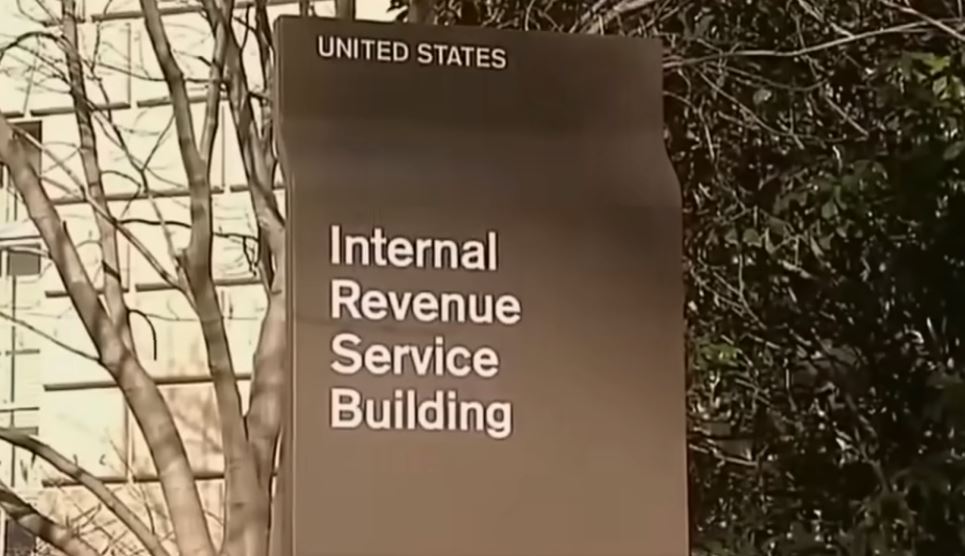
President Trump filed a lawsuit against the Internal Revenue Service in January 2026, alleging that the agency had neglected to stop the disclosure of his tax returns during his first term. At least $10 billion in damages was the audacious demand. The Justice Department never really defended the agency in court; by May, it had reached what it called a settlement. In addition to a $1.776 billion fund designated for victims of alleged government “weaponization,” the agreement gave Trump, his adult sons, and their businesses broad immunity from IRS audits.
That second section is worth pausing on. Audit immunity, which covers previously filed documents for an indefinite amount of time, is not a typical legal remedy. Experts immediately questioned whether this kind of protection could be provided at all. Judge Williams concurred. She concluded that the directive was in violation of a federal statute that forbade the White House from meddling in IRS investigations.
The person at the center of the decision, Acting Attorney General Todd Blanche, was what made it so remarkable. Blanche, a former personal attorney for Trump, signed the settlement on behalf of the Justice Department, which was meant to be Trump’s adversary in the case. Williams confronted this head-on. Blanche’s ability to “speak for both plaintiffs and defendants, sign a settlement document on behalf of all parties, and then repudiate part of that agreement,” as she put it, proved that the interests of essentially just one party were being served at all times.
It is difficult to ignore that observation. The adversarial process, which is the cornerstone of civil litigation, has ceased to operate as intended when one individual can sign both sides of an agreement and then withdraw half of it without any apparent repercussions. Williams wasn’t making gratuitous editorials. She was explaining what the record revealed.
Blanche had already been forced to publicly abandon the weaponization fund due to the bipartisan backlash that followed the deal’s initial announcement. However, the provisions pertaining to tax immunity remained unnoticed. Williams’ analysis took note of this selective retreat—giving up the politically explosive portion while retaining the financially valuable portion.
In any future legal proceedings, Trump, his sons, and his affiliated business entities are prohibited by her order from referencing the settlement or any of its terms. It is still unclear if this actually renders the audit immunity ineffective. Even though Blanche’s directive was months old, the IRS had not confirmed if it had been carried out.
Alejandro Brito, Trump’s personal attorney, was also referred by Williams to the Florida bar for possible disciplinary action. She prevented Daniel Epstein, another lawyer, from practicing in the Southern District of Florida for a year because he hadn’t even submitted the required paperwork to do so, which she saw as an indication that he had no real intention of pursuing legal action. She ordered the disciplinary authorities in New York and Washington, D.C., where Blanche and Associate Attorney General Stanley Woodward are licensed attorneys, to receive her decision.
The timing was noteworthy. Two days prior to Blanche’s scheduled appearance before a Senate panel for his confirmation hearing as permanent attorney general, Williams rendered her decision. It was already anticipated that the settlement would be a major subject. Her 56-page analysis, which was released shortly before the hearing, had clear implications.
One could interpret this decision as a significant turning point. It might be. However, caution is advised in this situation. Whether the audit immunity directive is valid is still the central legal question. The practical ramifications of Williams’ order are still being worked out, and courts don’t always proceed in a straight line.
The image she depicted—a lawsuit filed without the intention of being litigated, a settlement intended to provide benefits not possible through actual legal process, and a judicial system temporarily employed as a prop—seems more difficult to refute. Depending on what Congress decides to do and what the Senate decides to ask while observing Blanche across a confirmation table, that image may or may not go further.
