
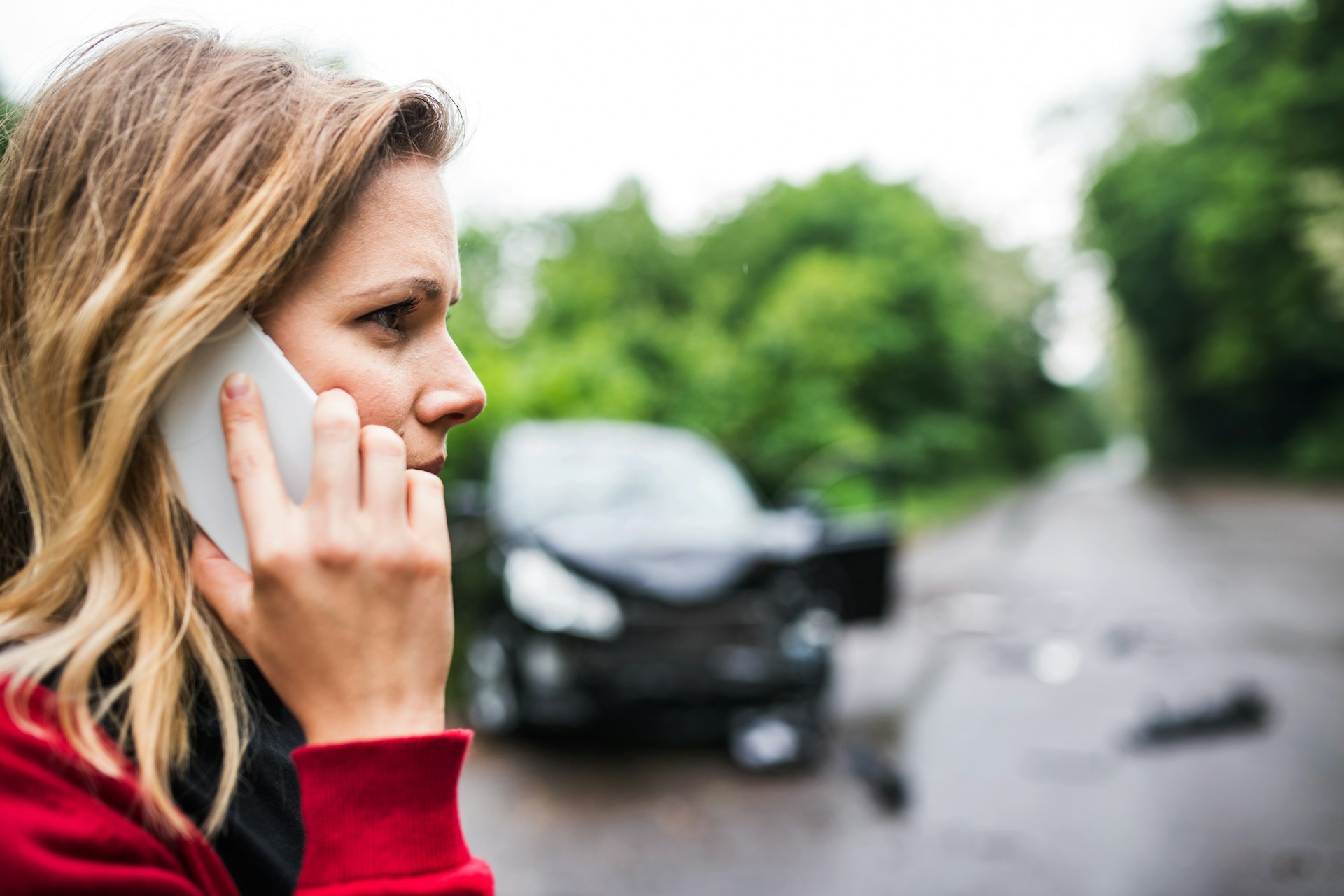

Got into a crash and had a drink to steady your nerves before the police showed up? That split-second decision could land you in serious legal trouble — but it doesn’t automatically mean a conviction.
Here’s what the law actually says, and what you can do about it.
The Moment Everything Changes
Picture this: You’ve just been in a collision. Your hands are shaking, your head’s spinning, and someone hands you a drink to calm down. It seems harmless. Then blue lights appear. The officer asks you to blow into a breathalyser — and the result comes back over the limit.
The problem? UK law initially assumes that whatever alcohol is in your system during the test was also in your system while you were driving. That presumption is baked into Section 15 of the Road Traffic Offenders Act 1988, and it puts you on the back foot immediately.
First, the Basics
Under the Road Traffic Act 1988, you must stop after a collision. Give your name, address, and vehicle registration to anyone who reasonably asks. If you don’t exchange details at the scene, you’ve got 24 hours to report it to a police station. Miss that window, and you’re looking at separate charges — failing to stop, failing to report — each carrying fines and penalty points on top of anything else.
When officers arrive, they have statutory power to request a preliminary breath test from any driver suspected of being involved. No suspicion of drinking required; involvement in the incident is enough.
The Hip Flask Defence — What It Actually Means
This is the specific legal argument that can protect you when post-accident drinking, not driving drunk, caused the failed test.
To rely on the hip flask defence successfully, you need to prove — on a balance of probabilities — two things: that you were under the legal limit while actually driving, and that drinks consumed after the accident pushed you over it. It’s your burden to make that case, not the prosecution’s job to disprove it.
That sounds straightforward. It isn’t.
Courts won’t take your word for it. You’ll need detailed records: exactly what you drank, how much, what strength, when you started and stopped, and what you’d eaten beforehand. Every detail feeds into a forensic calculation. A toxicologist will work backwards from your test result — factoring in your height, weight, age, and metabolism — to estimate your blood alcohol concentration at the time of the collision, minus the post-driving drinks.
Get those details wrong, and the defence collapses.
Why Evidence Collection Matters Immediately
Don’t wait. If you consumed alcohol after a collision but before a police test, do these things right away:
- Write everything down. Times, amounts, what you drank. Do it while it’s fresh — memory degrades fast under stress.
- Keep receipts and containers. An empty can or a till receipt is physical evidence. Don’t throw anything away.
- Find witnesses. Anyone who saw you drinking after the accident could be vital. Get their contact details.
- Stop drinking. The moment you know police are coming — or you’re about to report the incident — put the bottle down. More alcohol means a messier toxicological picture and a harder case to argue.
- Say nothing without a solicitor. Statements made under pressure get misread and can be used against you. Get legal advice before you explain anything.
The Numbers Behind the Stakes
This isn’t a situation where the odds are in your favour by default. In Great Britain, roughly 1,602 people died in road collisions in 2024. Authorities aren’t inclined to give drivers the benefit of the doubt when alcohol’s involved. Over 36,000 motorists were convicted of drink driving offences in England and Wales that same year — and conviction rates among those tested remain high.
If you’re in a collision, assume you will be breathalysed. Plan accordingly.
What a Conviction Actually Costs You
A standard drink driving conviction means a mandatory ban of at least 12 months, a significant fine, and potentially up to six months in prison. For anyone who drives for work, or simply needs a car to function day-to-day, that disqualification can be genuinely life-altering.
There’s a secondary route worth knowing: even if the hip flask defence doesn’t result in a full acquittal, evidence of post-driving consumption might be argued as a “Special Reason” to avoid the automatic ban. It’s a harder path legally, but it exists.
The catch? Neither route works without solid forensic evidence and proper legal representation.
The Bottom Line
UK road traffic law runs on strict liability. The prosecution often only needs to show that alcohol was present above the limit — full stop. The hip flask defence is a legitimate and recognised legal argument, but it demands precision, documentation, and expert evidence to work.
If you’re facing this situation, the quality of your legal team and the evidence you gather in the hours immediately after the accident will likely determine the outcome. Don’t leave either to chance.
