
After years of waiting, a different home eventually receives a verdict that uses the word “exonerated” instead of “guilty.” Before that, Arturo DeLeon-Reyes was incarcerated for 26 years. The recent settlement reached by the city of Chicago in his lawsuit closes one chapter in a much longer institutional pattern that the city has been attempting, with varying degrees of success, to address.
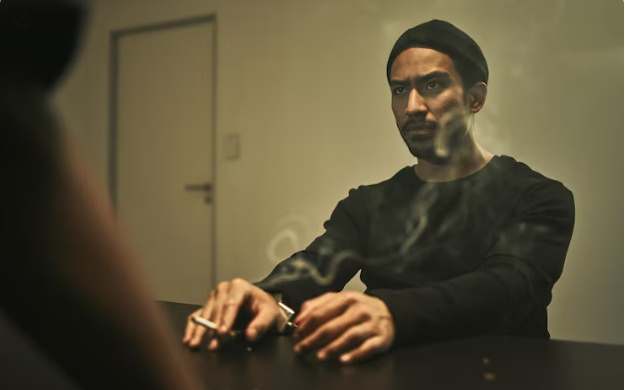
The initial case was filed in 1998. At the age of 19, DeLeon-Reyes was taken into custody in relation to the kidnapping and killing of two victims in the Bucktown district of Chicago. By all accounts, the case was horrific, and there was a lot of public pressure on Chicago Police Department investigators to find a solution. Detectives, including Reynaldo Guevara, a veteran CPD investigator whose name has become synonymous with a string of false conviction cases in the Latino communities of Chicago’s North and Northwest Sides over the past 15 years, conducted a nearly two-day questioning. DeLeon-Reyes made a declaration. His conviction was secured by the statement. Throughout the trial and all subsequent appeals, he insisted on his innocence.
Throughout his imprisonment, he made numerous accusations against Guevara, outlining a pattern that has grown eerily familiar. DeLeon-Reyes claims that throughout the interrogation, Guevara repeatedly punched him in the head and made up parts of the confession. The content of his numerous court documents has not changed, but the specifics have. He didn’t take part in the crime. He was worn out and beaten, so he confessed. According to him, the confession was actually a fake document that the police forced him to sign. For many years, those allegations were dismissed as the typical objections of a convicted criminal. Due to the federal settlement, they are now regarded as more accurate.
The aspect that merits further examination is the city’s choice to resolve the federal complaint prior to a jury trial. Like most municipal legal offices, Chicago’s legal department incorporated conventional non-admission wording in the deal, so a settlement in this type of dispute does not amount to a formal acknowledgment of wrongdoing. However, the financial choice to reach a settlement instead of going to court conveys a different message than the legal wording. When the underlying misconduct claims are adequately documented, federal civil rights actions involving wrongful convictions can reach awards in the eight-figure range. Such settlements occur when the city’s legal team evaluates the litigation risk and determines that the expense of payment outweighs the difficulty of defending the underlying behavior.
Speaking with civil rights lawyers who have worked on the larger Guevara cases, it seems that Chicago has been handling the DeLeon-Reyes settlement for years. In Guevara-related cases, dozens of prisoners have been cleared, frequently after serving decades in prison. Over the past 20 years, the city has had to pay hundreds of millions of dollars in settlements, verdicts, legal bills, and wider institutional ramifications.
When the instances involving former CPD Commander Jon Burge—whose torture-based confession techniques resulted in an even greater number of erroneous convictions during the 1970s and 1980s—are included, the number increases even more. In all honesty, the Chicago Police Department has suffered greatly both financially and morally as a result of the actions of a tiny number of detectives whose behavior was accepted for far too long.
A more resilient institutional response might emerge in the coming years. In an effort to stop the kind of wrongdoing that led to the Guevara and Burge prosecutions, the Chicago Police Department has changed interrogation procedures, video recording regulations, and monitoring procedures throughout the course of the last 10 years. Certain areas have seen quantifiable benefits as a result of those measures.
The city has been exposed to continuous legal responsibility due to the sluggish pace of exonerations in the instances that preceded the reforms; DeLeon-Reyes’s case is one of several that took decades to settle. The older cases are not closed by the reform window alone. Each must be challenged separately, frequently by underfunded post-conviction legal teams battling the typical institutional opposition of the initial police and prosecution departments.
The cash settlements may not be the most significant aspect of these situations. It’s the cumulative impact on public confidence. Guevara worked in the largely Latino communities of Logan Square, Humboldt Park, and the Northwest Side, all of which have significantly reduced public trust in the investigative integrity of the Chicago Police Department. The ramifications of this mistrust go far beyond the particular cases that have been cleared. Witnesses are less inclined to assist. Communities are less likely to share information. In this dimension, the cost of years of wrongdoing is expressed in terms of the police department’s institutional ability to carry out its current duties efficiently rather than in monetary terms. Every account is still paying that expense.