
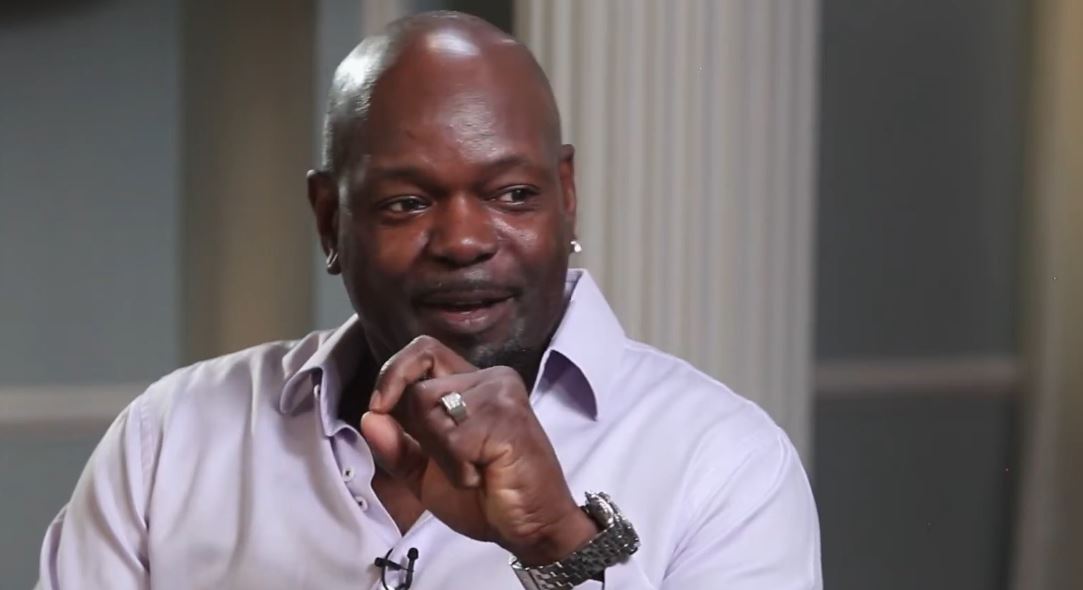

During his NFL career, Emmitt Smith ran for 18,355 yards. He won three Super Bowls, broke Walter Payton’s record, and accomplished nearly impossible feats for the majority of his career. This is one of the reasons it is so startling to sit through a lawsuit that was filed in a Delaware courtroom in late August 2026.
Smith, his longtime business partner David Mosley, and their commercial real estate company, 4 13 Solutions Inc., are being sued by Kituwah LLC, the economic development arm of the Eastern Band of Cherokee Indians, which is based in western North Carolina. The lawsuit concerns an alleged scheme involving a $2.5 million loan that was intended to finance Project Exodus, a Texas renewable energy project. Pitched as a solar and wind farm between Austin and San Antonio, the project was never carried out. The lawsuit claims that the money ended up somewhere else.
Kituwah specifically asserts that the $2.5 million was transferred to Wilson Holdings of North America LLC, a different business that Smith and Mosley had previously done business with, as payment for past failed endeavors. Wilson Holdings would only be compensated if Project Exodus obtained long-term funding from the Department of Energy, according to the terms of the agreement between 4 13 Solutions and Kituwah. That funding was never acquired.
According to Kituwah’s lawyers, the arrangement functions “essentially, like a Ponzi scheme.” It’s the kind of detail that warrants a second look when it appears in a formal legal complaint against one of the NFL’s most decorated players.
If accurate, the timeline presented in the lawsuit is hard to read with compassion. Early in 2023, Kituwah and 4 13 Solutions started talking about the project. According to reports, Smith and Mosley sent updates on loan applications, financing commitments, and revenue projections during that summer. One such document stated that Kituwah would receive 100% of the project’s earnings.
The project was estimated to be worth $396 million, with a first-year revenue of almost $14 million. Two energy companies had made commitments to Kituwah by August 2023. According to the lawsuit, those promises were either made up, misrepresented, or quietly withdrawn. On September 1, 2023, Kituwah delivered the $2.5 million. The loan was due on February 1st, 2024. It is still unpaid.
Apparently, months of unanswered notices followed. According to the complaint, 4 13 Solutions just stopped answering Kituwah’s requests for repayment. According to Kituwah, it “has not recovered a penny.” Notably, even Darrel Wilson, whose business received the $2.5 million, admitted to Kituwah’s lawyers that he had no idea what had prompted the payment and that he didn’t think long-term financing had been obtained at the time it arrived.
It’s difficult to ignore the case’s unique significance beyond its monetary value. The Eastern Band of Cherokee Indians is a tribal community that has spent generations navigating restricted access to capital and investment markets. Kituwah LLC was established specifically to create economic opportunities for this community. For an organization like that, a $2.5 million commitment is not a casual allocation. It is a significant and intentional use of local resources. A lawsuit can’t really address whether Smith and his partners were aware of or concerned about that context.
In the realm of post-career athlete endeavors, this type of business dispute is not uncommon. NFL players frequently enter the real estate, energy, and private equity markets with varying degrees of success and rigor because they are wealthy and well-known. Through 4 13 Solutions, Smith has worked in commercial real estate for many years. Apparently, none of that experience stopped this case from going to court.
The Court of Chancery in Delaware, which deals with complicated business and corporate litigation, has received the case. Smith is accused of breach of contract, breach of fiduciary duty, and fraudulent inducement. Messages sent to the company were not promptly returned, and neither Smith nor 4 13 Solutions had an attorney of record listed in the initial filings.
What Smith’s legal defense will entail, whether there are any facts that could change the situation, and how long this takes to proceed through the courts are just a few of the many unknowns. The lawsuit’s existence, the specific allegations, and the tribal investment fund’s claim that it trusted a well-known individual with funds it hasn’t seen since are all evident.
