
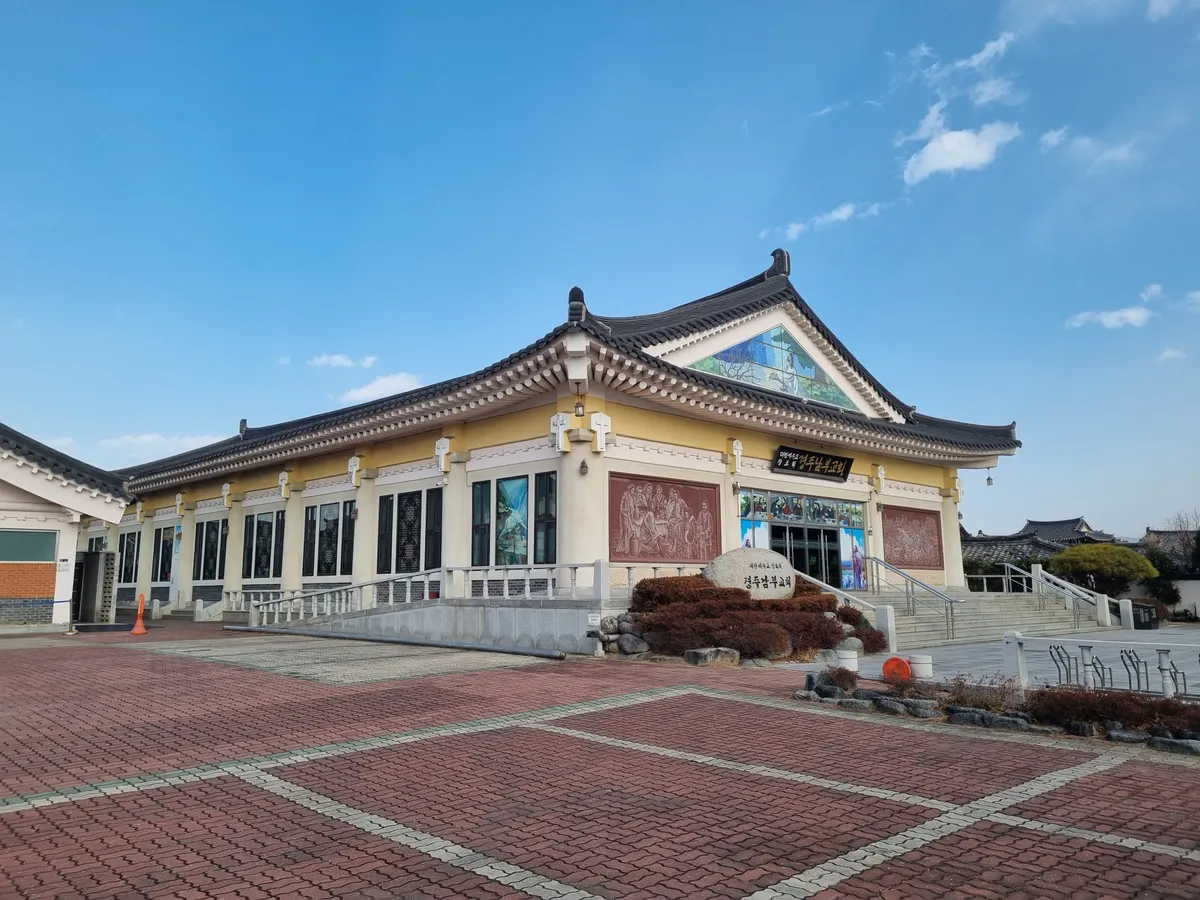

The Olympus Spa Supreme Court petition, filed on 10 August 2026 and docketed as No. 26-286, asks the justices to decide whether Washington State’s anti-discrimination law can lawfully compel an all-female Korean spa to admit preoperative transgender women into its nude bathing area.
The case has wound through the federal courts since 2022, producing rulings that have sharpened a genuine tension between anti-discrimination statutes and First Amendment freedoms, without resolving it.
What the Courts Have Decided So Far
The dispute began in 2020 when Haven Wilvich, who has identified as a ‘nonbinary trans woman,’ lodged a complaint with the Washington State Human Rights Commission (WSHRC) after being turned away from the Olympus Spa location in Lynnwood, Washington, for having a penis. The spa accepts postoperative transgender women but not preoperative ones.
Washington’s Law Against Discrimination (WLAD) bars discrimination on grounds that include ‘gender expression or identity.’ Olympus entered a settlement with the WSHRC in October 2021, then sued, arguing the enforcement action violated its owners’ First Amendment rights.
Judge Barbara Jacobs Rothstein of the United States District Court for the Western District of Washington dismissed the complaint on 15 November 2023, a decision reported at 675 F.Supp.3d 1168.
A three-judge panel of the Ninth Circuit upheld that outcome in a May 2025 opinion reported at 138 F.4th 1204. The panel comprised Judges M. Margaret McKeown, Ronald M. Gould, and Kenneth K. Lee, with McKeown writing for the majority. Judge Lee dissented from the merits ruling.
McKeown wrote that the government’s objection to the spa’s entrance policy ‘was not based on disagreement with the message it conveys, but rather with the practice it described, a practice that was unlawful under WLAD.’ Classifying a nude spa as an expressive association, she added, ‘would stretch the freedom of association beyond all existing bounds.’
The court also noted that Olympus Spa had not challenged WLAD’s text or argued that its conduct fell outside the statute’s definition of discrimination on the basis of gender expression or identity. ‘It is not our role to rewrite the statute,’ the majority said.
The Ninth Circuit subsequently denied rehearing en banc. Judge Lawrence VanDyke dissented from that denial, and his opinion drew a rebuke from 27 colleagues. Judge McKeown, in her statement respecting the denial, characterised his writing as using ‘vulgar barroom talk,’ language recorded in the amended opinion of 12 March 2026, reported at 169 F.4th 817.
The Olympus Spa Supreme Court Arguments: Association, Religion, and WLAD’s Exemptions
Olympus Spa is represented by Alliance Defending Freedom and Pacific Justice Institute, with John J. Bursch of Alliance Defending Freedom as lead counsel of record on the cert petition. The petition was filed after the Supreme Court granted an extension from the original 10 July 2026 deadline, as recorded in the Supreme Court’s extension application.
The petition frames the spa as ‘a cultural institution founded to transmit and preserve centuries-old Korean communal bathing traditions in an intimate, sex-separated setting, consistent with its owners’ cultural and religious heritage.’ The owners are Christian and, per the petition, ‘hold the religious conviction that men and women should not be unclothed together unless married to each other.’
Eugene Volokh, a First Amendment specialist and professor emeritus at UCLA School of Law, cautions that the associational freedom argument faces established precedent. ‘Generally speaking, the Court has been reluctant to allow businesses to say, “We get to associate with whomever we please,”‘ he said. ‘The Supreme Court has repeatedly rejected any such claim.’
The religious exemption argument may carry greater traction with the justices, precisely because the case law in that area remains unsettled. The petition relies heavily on the Supreme Court’s 2021 decision in Tandon v. Newsom, which held that the government generally cannot burden religious activity more than comparable secular activity without surviving heightened scrutiny.
WLAD does carve out an exemption for ‘bona fide clubs,’ meaning distinctly private organisations. That exemption, however, turns on the public-versus-private distinction, not on religiosity, which complicates the petition’s attempt to bring Olympus Spa within its scope. As the petition itself acknowledges, had the spa ‘operated as a private club or as part of an Asian-interest sorority rather than as a public business, it would be free to exclude male patrons, no questions asked.’
Volokh raises a further question that the Court would need to confront if the religious-exemption argument succeeds: what of spas with no religious affiliation that nonetheless wish to maintain sex-separated nude facilities? ‘There are going to be lots of other spas that say, “Honestly, we have no religious beliefs here, but we do believe that women and men should be naked separately. We’re just not religious,”‘ he said. ‘Where would that leave those businesses?’
That gap between the legal framework and practical reality is one that courts alone may be unable to close. Volokh has previously observed that Washington’s legislature could amend WLAD to permit places of public accommodation to segregate facilities by anatomical sex, but the political will for such a change is far from clear.
A subsequent Ninth Circuit opinion filed 14 September 2026 references No. 26-286 as pending before the Supreme Court. Subject to any grant of certiorari, the justices’ decision whether to hear the case will test how far religious-exemption doctrine extends into the regulation of sex-separated public accommodations, and whether the answer differs depending on who is asking.
