

Witnessing one of the biggest religious organizations in the world file a federal lawsuit over a podcast that has been operating, largely in secret, for over two decades is truly bizarre. However, the Church of Jesus Christ of Latter-day Saints is currently suing Mormon Stories host John Dehlin for trademark infringement.
The lawsuit, which was filed in April 2026 following the failure of the parties’ mediation, focuses on Dehlin and his nonprofit organization, the Open Stories Foundation, for allegedly using branding, logos, and copyrighted images to deceive listeners into believing the podcast was an official church product. One thing the church’s lawyers have taken care to clarify is that this isn’t about stifling criticism. Dehlin identifies as a Mormon pundit. He is free to criticize the faith as loudly as he pleases. The church contends that he is unable to dress his content in markings that appear to be associated with the organization he is criticizing.
In any case, that is the church’s stance. Dehlin’s perspective presents an entirely different picture.
To begin with, Dehlin has admitted that he used some church photos without permission and that some of the logos his operation used resembled those of the church. He claims that after the church’s intellectual property team contacted him in November 2025, adjustments were made. Copyrighted images were removed, and the Mormon Stories logo changed to orange. Dehlin declined to start every video and episode with the church’s preferred disclaimers.
According to the church, those disclaimers might as well not exist at all if they are buried at the bottom of a webpage after four full screens of scrolling or concealed behind a click on YouTube and Spotify. It’s a minor detail, but in trademark cases, even the smallest details can have a big impact.
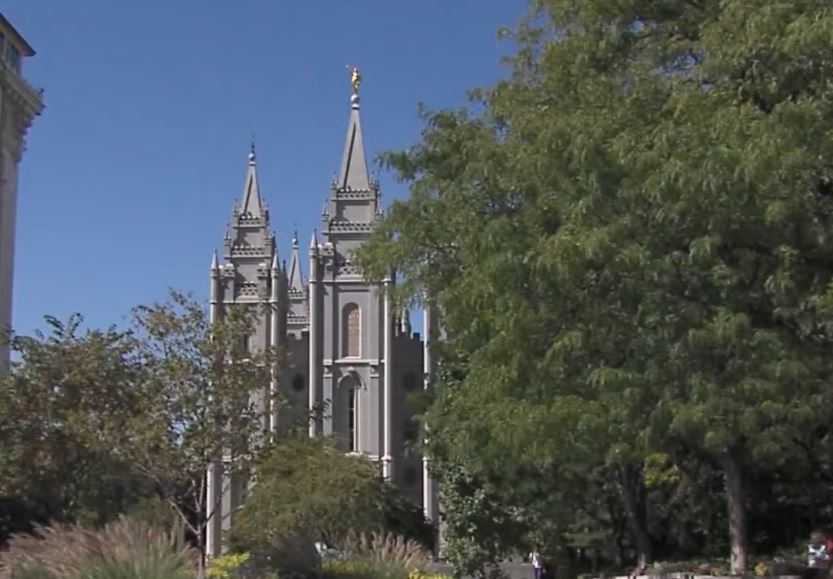
The counterattack Dehlin’s legal team has launched is what makes this case truly complex and worth closely observing. They’re not merely refuting the church’s assertions. They are directly challenging the church’s trademarks, requesting that eleven of them be revoked by the court. The trademark for the term “Mormon” itself is on that list, as are trademarks associated with “Book of Mormon Stories,” “Mormon Channel,” “Mormon Messages,” and the name that the Tabernacle Choir formerly used.
The defense’s main claim is that the church continued to submit sworn declarations to the US Patent and Trademark Office claiming active use of the word “Mormon” despite having publicly abandoned it years ago, with church leadership even referring to its use as a victory for Satan. The church will have a much larger issue than one podcaster’s branding decisions if the fraud claims prove to be true.
The main point of the ACLU’s amicus brief, which it filed in support of Dehlin, is that the church most likely didn’t want the case to be heard in public. “Mormon” does not serve as a source identifier for a single institution, according to the brief. It encompasses a whole religious and cultural heritage that predates and goes far beyond the church located in Salt Lake City. Not every group that uses the term owes its identity to the LDS Church, and not every Mormon is a member of that organization. The ACLU argues that attempting to claim ownership of that word through trademark law may be constitutionally problematic in addition to being legally dubious.
There’s a feeling that the church entered this situation anticipating a straightforward legal dispute and discovered something far more complicated. A concept in trademark law known as laches holds that a right may be lost if it is not enforced promptly. Since 2005, Mormon Stories has been in business. It wasn’t until 2007 that the church registered its own trademark on “Mormon” in an educational setting. Using meetings between Dehlin and church officials as proof, Dehlin’s lawyers contend that the church’s senior leadership knew about the podcast’s existence. Letting something continue for twenty years before determining that it is an infringement is a long time.
It’s difficult to ignore how the timing here raises issues that the church might find difficult to clearly address. The court’s decision will depend on the evidence and arguments that are still being gathered. However, the practical and reputational consequences for the church would go well beyond this particular case if the defendants are successful in canceling even a few of those eleven trademarks. Communities all over North America have used the term “Mormon” for generations. A podcast wouldn’t be the only thing impacted by losing the exclusive claim to it in court. It would change something that the church has been attempting to control for years.
