
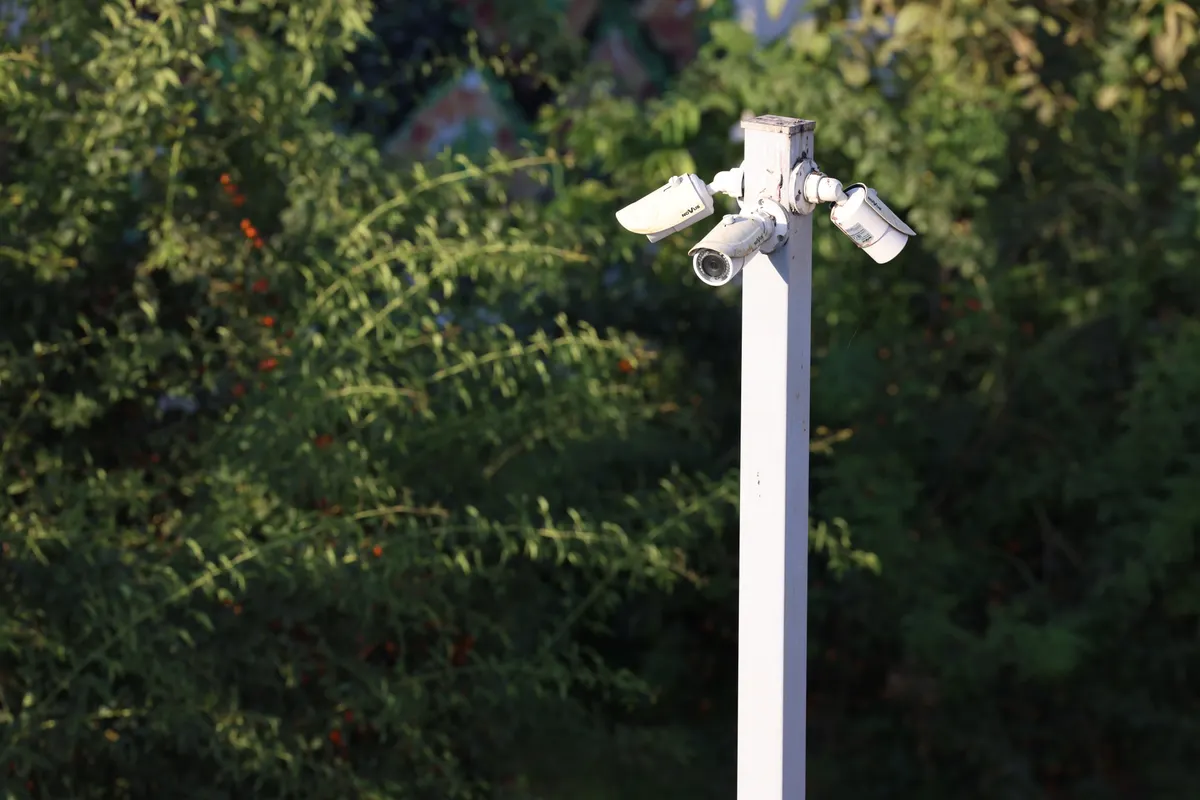

The Brooke High School hidden cameras case has escalated sharply since the initial arrest of WDTV-reported suspect Eric Michael James, 53, with prosecutors filing additional felony charges, civil lawsuits naming the school board, and a state legislator calling for reform of West Virginia’s covert-filming laws.
The Brooke High School Hidden Cameras Investigation
Authorities first discovered the surveillance equipment at Brooke High School in Wellsburg, West Virginia, after a custodian found a recording device disguised as a pen. Investigators subsequently located three more devices in the girls’ locker rooms and a room used by the school’s dance team.
Footage recovered from one of the devices showed James placing the camera and adjusting its angle. Brooke County Sheriff Richard Beatty confirmed that investigators recovered the footage as part of their examination of the equipment.
James was booked into the Northern Regional Jail on a $100,000 cash-only bond, according to WTOV9. Sheriff Beatty stated that if James posted bond, he would be placed on home confinement and electronically monitored. James has since been released and is now subject to GPS monitoring on home confinement, WTOV9 reported.
Escalating Charges and a Legislative Gap Exposed
James initially faced felony charges related to breaking and entering and a single count of illegally intercepting electronic communications. Prosecutors have since filed additional counts: James now faces three felony counts of intentionally intercepting or attempting to intercept wire, oral, or electronic communications, according to the Times Leader.
The Brooke County Board of Education terminated James’s employment following his arrest. He subsequently waived his right to a preliminary hearing in Brooke County, and his case has moved to circuit court, WV Metro News reported on 21 September.
The Brooke High School hidden cameras investigation has also drawn attention to gaps in West Virginia statute. A state senator identified as Sen. Weld said the case exposed a weakness in state code regarding punishment for those who covertly film others, and called for a felony penalty to be enacted for secretly filming individuals, West Virginia Watch reported. Under current West Virginia law, the charges James faces relate primarily to wiretapping statutes rather than a dedicated voyeurism or covert-filming provision that would carry a standalone felony classification.
Civil litigation is also accumulating. Multiple lawsuits have been filed in Brooke Circuit Court naming both James and the Brooke County Board of Education as defendants. At least two civil complaints were filed on 4 September, according to Legal News Line. The inclusion of the school board as a defendant will focus attention on what supervision was in place and whether institutional failures contributed to the devices going undetected.
The Brooke High School hidden cameras case now presents three distinct legal fronts: criminal prosecution in circuit court, civil claims against both James and the board, and a potential statutory response from the West Virginia legislature. The school board’s exposure in the civil suits, and the pace at which prosecutors expanded the charge sheet, will determine how far institutional accountability extends beyond James himself.
The circuit court proceedings, and any legislative action Sen. Weld pursues in the next session, will be the next markers to watch.
