

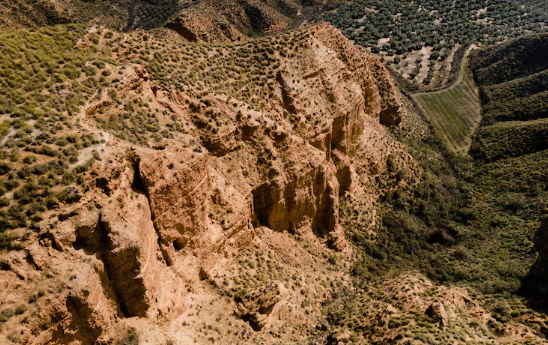
Even by California desert standards, the preserve feels genuinely remote due to the way the Clark Mountains rise out of the eastern Mojave. At higher elevations, Joshua trees become fewer in number, giving way to pinyon pine and the kind of quiet that requires many minutes to become comfortable. By all accounts, this is the type of terrain that the California Desert Protection Act of 1994 was designed to protect. Located in those highlands, the Colosseum Mine has been legally closed and undergoing restoration since 1993.
The National Parks Conservation Association and Earthjustice filed a federal complaint in April 2026, claiming that the National Park Service and the Interior Department illegally authorized its reopening without a legitimate operating plan and without the required environmental evaluation. Australia-based Dateline Resources, the mine’s new operator, says it plans to continue operating in any case.
| Category | Details |
|---|---|
| Plaintiffs | National Parks Conservation Association (NPCA) and Earthjustice |
| Defendants | U.S. Department of the Interior, National Park Service, Interior Secretary Doug Burgum |
| Filed | April 2026 — federal court |
| Mine Location | Colosseum Mine, Clark Mountains — within the Mojave National Preserve, California (1.6 million acres) |
| Mining Company | Dateline Resources — Australia-based; seeking to extract gold and rare earth minerals |
| Mine History | In reclamation since 1993 — lawsuit alleges reopening approved without valid plan or environmental review |
| Laws Allegedly Violated | Mining in the Parks Act, National Environmental Policy Act (NEPA), California Desert Protection Act |
| Environmental Risks | Threatens desert bighorn sheep habitat; potential impact on local water sources |
| Company Response | Dateline indicated it would continue operations despite legal challenge; shares dropped after announcement |
| Further Coverage |
The Mining in the Parks Act, the National Environmental Policy Act, and the California Desert Protection Act are the three federal statutes allegedly violated in the complaint, which was brought by Earthjustice on behalf of the NPCA and names Interior Secretary Doug Burgum among the defendants. The case claims that each of those laws’ procedural requirements—such as environmental impact assessments, public comment periods, and agency findings—were either circumvented or carried out insufficiently prior to approval.
The combination of gold and rare earth minerals that Dateline is attempting to extract from the site has grown more appealing to mining firms as the demand for rare earths rises and the current administration has indicated a much more permissive attitude toward resource extraction on federal land.
The complaint brings up particular environmental issues rather than broad ones. The Clark Mountains provide as habitat for desert bighorn sheep, and the population in that region of the Mojave is too small to withstand major disruption without negative effects.
The region’s water resources, which are already limited in a precision-driven desert ecology, may be impacted by mining activities in ways that go much beyond the mine’s direct boundaries. These are the kind of site-specific ecological facts that environmental assessment procedures are intended to reveal before operations start, not after; they are not hypothetical issues introduced for rhetorical effect. It is alleged that certain procedures were neglected.
Dateline Resources, whose stock fell after the case was made public, has stated that it will keep operating at the location. In mining disputes, where the financial rationale of maintaining a project can outweigh the reputational cost of the legal battle, this stance—moving forward while litigation is pending—is not unusual.
Dateline may be placing a wager on a settlement that permits altered operations or a positive decision. It’s also possible that the business determined that even if the case succeeds, a total stop is improbable given the present political climate. Both of those wagers are risky, and the share price response indicates that investors may not be totally satisfied with the odds.
It’s difficult to ignore the fact that this case comes at a time when the federal government is genuinely disputing the distinction between protected land and extractable resources, as evidenced by the shrinkage of several national monuments, the relaxation of environmental review regulations, and the drastic reduction of agency staffing at land management organizations.
In this way, the Mojave litigation serves as a test case for whether the current statutory protections—such as the California Desert Protection Act, NEPA, and the Mining in the Parks Act—still have practical significance when an administration actively seeks to increase extraction. According to the plaintiffs, they do. The result will indicate whether or not the argument is valid.
