

When a certain type of automobile issue occurs, it may not seem like a problem at first. One morning, you go to the driveway, turn the key, and nothing happens. Perhaps a click, if you’re lucky. The majority of drivers shrug, think they left a light on, get a jump from a neighbor, and carry on. The explanation seems flimsier the second time it occurs. You are phoning the dealership by the third.
A 116-page proposed class action lawsuit against Subaru claims that this precise sequence has been happening in American driveways for years, frequently in silence and without anybody noticing. According to the complaint, nine model years of some of Subaru’s most well-liked cars have a significant electrical flaw.
| Information | Details |
|---|---|
| Defendant | Subaru of America |
| Case Type | Proposed nationwide class action |
| Filing Length | 116 pages |
| Alleged Defect | Parasitic battery drain (“dark current draw”) |
| Root Cause Claim | Electronic control modules failing to enter “sleep” state |
| Component Singled Out | Data communication module (DCM) |
| Affected Models | 2021–2022 Outback, 2021–2024 Forester, 2021–2023 Legacy, 2021–2023 WRX, 2021–2022 Ascent, 2019–2023 Crosstrek, 2019–2024 Crosstrek Hybrid, 2022–2025 Forester Wilderness, 2019–2023 Impreza |
| Alleged Knowledge Date | At least 2014 |
| Evidence Cited | Technical service bulletins, NHTSA complaints |
| Warranty Allegation | Drivers told battery “needed to be recharged” only |
| Key Safety Risk | Vehicle disabled, children or pets potentially locked in |
| Out-of-Pocket Costs | Replacement batteries, jumper packs, towing |
| DCM Behavior Cited | Searches for cell signal up to 14 days |
| Relief Sought | Damages, injunctive relief, class certification |
| Industry Tracker | Top Class Actions |
| Class Scope | U.S. buyers and lessees of named models |
The case’s technological core is remarkably detailed, indicating that significant engineering effort was put into the filing. Like the majority of contemporary automobiles, current Subarus are not truly single units. These are networks of tiny computers, referred to as electronic control units, that communicate with one another via a controller area network.
These devices are meant to drift into a low-power condition, commonly referred to as a “quiescent state,” when the driver switches off the vehicle, taking just a little amount of electricity from the battery so the vehicle may start up again the following morning. According to the lawsuit, one or more of these devices in the impacted cars never go to sleep completely. They continue to draw power. They kill the battery gradually, sometimes overnight, sometimes over a few weeks.
The list of models is sufficiently extensive to be significant. The 2021–2022 Outback, 2021–2024 Forester, 2021–2023 Legacy, 2021–2023 WRX, 2021–2022 Ascent, 2019–2023 Crosstrek, 2019–2024 Crosstrek Hybrid, 2022–2025 Forester Wilderness, and 2019–2023 Impreza are all covered by the complaint. That effectively represents a significant amount of Subaru’s North American portfolio over the course of more than ten years. In the United States, Subaru sells about 600,000 cars annually, and its loyalty rate is renowned. Many of the impacted owners are drivers on their second or third Subaru; they choose the brand because they had faith in it.
The timeline is what gives the lawsuit its advantage. Citing a number of technical service advisories the carmaker sent to its dealers internally, the complaint claims that Subaru has been aware of the fundamental issue since at least 2014. According to the complaint, one of those advisories implied that when reception was weak, the data communication module—which is in charge of the car’s cellular connectivity—would continuously look for a cell network. According to the notice, even after the automobile was shut off, the search activity might keep the module active and consuming power for up to fourteen days. Fourteen days. That is a significant figure for anyone who has parked at an airport for a week.
In several aspects, the case’s warranty component is the most uncomfortable. According to the complaint, when impacted owners brought their vehicles in for maintenance, they were frequently informed that the battery was operating correctly and just “needed to be recharged.” In other instances, it has been reported that dealers changed the battery without fixing the underlying drain. The lawsuit claims that as a result, when their cars broke down suddenly, owners had to pay for ride-sharing, towing services, replacement batteries, and portable jump packs out of pocket. Reading the complaint gives me the impression that Subaru will find it most difficult to explain the discrepancy between what the technicians understood and what the customers were told.
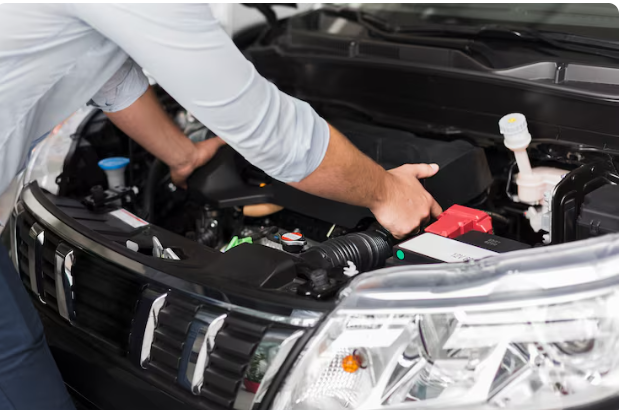
Beneath the technical details are actual safety issues. A dead battery in a modern car is not as annoying as it formerly was, according to the lawsuit. Key fobs become inoperable. Power locks can malfunction in ways that are not always obvious. In cold weather, a driver might be stuck on the side of the road, unable to call for assistance if their phone is also dead, or, as the complaint expressly states, locked out of a car while a child or pet is still inside. These are not theoretical issues. These are precisely the types of edge circumstances that frequently appear in the databases of NHTSA customer complaints.
At this point, Subaru has not acknowledged any wrongdoing and has not publicly addressed the details of the lawsuit. The business will probably contend that the problem is a regular operational condition made worse by human conduct rather than a fault, as automakers typically do in situations like this. brief excursions. items from the aftermarket. batteries that are older. In some circumstances, some of such defense might even be valid. However, it will be more difficult to write off the complaint’s wide pattern—which spans nine model years and several platforms—as user error.
The legal path ahead will be gradual. If Subaru decides to battle rather than reach a settlement, the case may go on until the end of the decade. Class certification alone may take a year or longer. As this develops, it is difficult to avoid wondering how many Subaru owners who are reading the news today will be able to identify their own driveway from the description. An automobile that functioned well for many years. A few of mysteriously dead batteries. After visiting a dealership, they were left with a new battery and a hazy feeling that there was still a problem. For the first time, all of those little tales can finally be told together in a public courtroom thanks to the lawsuit.
