
Once you’ve written it out, the timing in this situation has a certain brutality that is difficult to overcome. Ethan Cantrell, 18, was cutting wood early on August 15, 2024, when a piece of debris struck his right arm. a puncture wound. The kind of injury that should result in a cleaning, some stitches, a course of antibiotics, and a story to tell later—the kind that frequently occurs to individuals who work outside in Oregon. Ethan died five days after that routine mishap. According to the case his family filed in Multnomah County Circuit Court, carelessness filled the gap between those two facts—a common wound and a dead teenager.
The main accusation is really straightforward. The complaint claims that the wound still had twigs, pine needles, and moss when Dr. Robert Schweiss examined Ethan in the emergency room at Good Samaritan Regional Medical Center in Corvallis. According to the lawsuit, the doctor sutured it shut after irrigating it with saline. Behind stitches, organic forest debris was locked inside a young man’s arm. The mix of organic materials and a tightly closed wound is nearly a textbook recipe for the type of infection that kills, so if you know anything about wound care, you can immediately feel the dread rising.
The X-ray is the detail that complicates this issue both morally and legally, and it should be regarded seriously rather than dismissed. When Schweiss ordered an X-ray, it revealed soft tissue air but no abnormalities in the bones or “no radio-opaque foreign body.” The issue raised by the case is that X-rays typically do not reveal wood, mud, or pine needles. They have radiolucency. Therefore, organic waste cannot be ruled out by an X-ray that shows no foreign items. Stitching a deep, infected puncture wound closed based only on imaging is not the standard of treatment. The purpose is to examine the wound, carefully clean it, and frequently leave it exposed rather than sealing it to prevent possible contamination. That is the core of the accusation of negligence.
The next event is what transforms a tragedy into a lawsuit. After receiving a seven-day antibiotic prescription, Ethan was released. The pain and swelling began that same afternoon, and the fever began to rise. Jody Mae Cantrell, his mother, made a hospital call. The lawsuit claims that a nurse informed her that since he was taking antibiotics, there was no reason to be concerned. He had worsening symptoms the following day, including increased pain, edema, and fever. She made another call. She was instructed to return him to the emergency room this time. When a concerned mother called to report the early warning signs of a devastating infection, the answer was reassuring rather than worry.
The window had already closed when the system realized what was going on. The infection had gotten worse. Without success, doctors tried four different combinations of antibiotics. One doctor expressed fear about necrotizing fasciitis, a flesh-eating condition that spreads frighteningly quickly. Ethan was flown to OHSU in Portland on August 19 by Good Samaritan. According to the lawsuit, the doctors there stabilized him and performed surgery as soon as they realized the condition was life-threatening. In a final effort to halt the spread, they amputated his right arm all the way up to the shoulder. It was insufficient. Five days after entering an emergency room with a treatable wound, Ethan passed away on August 20 just before 4:30 in the afternoon.
In addition to Good Samaritan, two physicians, Schweiss and McCalla, as well as its third-party ER staffing company, Mary’s Peak Emergency Physicians, are named in the case. It is important to note that this structure—a hospital, a distinct physician-staffing firm, and individual clinicians—reflects the extent to which American emergency medicine currently relies on outside staffing contractors rather than hospital-employed physicians. When something goes wrong, the question of who is truly at fault is divided among several organizations, each of which has insurance and an incentive to blame someone else. The family has other wealthy defendants to name, which contributes to the $100 million amount they are requesting.
Tyler Jacobsen, Samaritan Health Services‘ chief legal officer, has stated that the company will react “through the appropriate legal process” and expressed compassion to “all who have been impacted by this loss.” That’s the typical institutional approach, and it’s important to keep in mind that the accusations are still just that—allegations. The family’s story may be complicated by clinical intricacies, and the hospital hasn’t had a chance to defend itself.
Not all negative outcomes are the result of carelessness in emergency medicine, which requires making extremely difficult decisions under time constraints. However, it is difficult to look at the uncontested basic facts—debris in the wound, a neatly sutured closure, a clean X-ray that couldn’t have identified biological material, and an eighteen-year-old who died five days later—without feeling that something went horribly wrong somewhere along that chain.
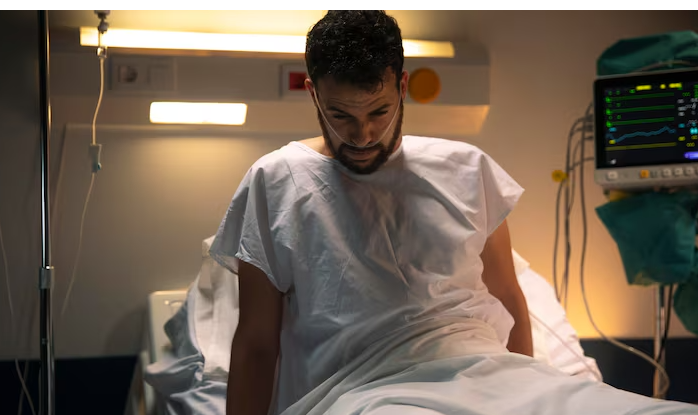
I believe emergency physicians will be discussing this case in private because it contains a larger lesson. The research makes clear how dangerous it is to believe a negative X-ray for radiolucent foreign bodies, yet the psychological appeal of a clear imaging result is strong, particularly in a busy emergency room.
After the fact, it’s simple to argue that the wound ought to have been investigated and left open. It’s more difficult when there are a lot of patients in the waiting area, a child who appears stable, and an X-ray that shows nothing. That is not a justification. It explains how someone who wasn’t being careless could have made a deadly error by being careless with a wound that turned out to be far more hazardous than it appeared.