
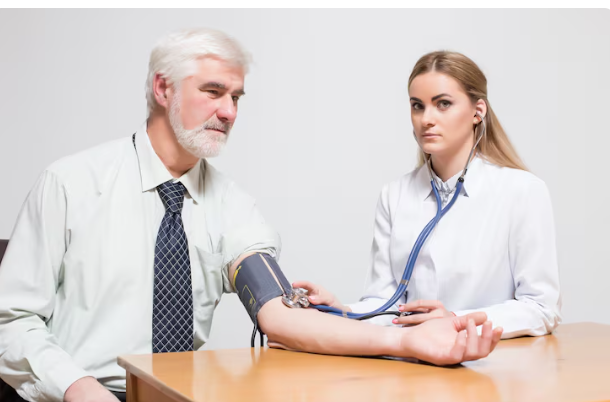

The scenario appears normal on a calm morning inside a local pharmacy. Sitting on a little chair next to a coin-operated blood pressure machine, a patron inserts an arm inside the rigid nylon cuff. With a slight hiss, the apparatus whirrs, tightens, and finally releases. It takes less than a minute to complete. However, a small routine that is hardly noticed among vitamin and cough syrup shelves, according to doctors, might mean the difference between a sudden medical emergency and decades of healthy living.
Over time, hypertension, also known as high blood pressure, has come to be known as “the silent killer.” Although it sounds dramatic, doctors use this statement for a purpose. The majority of people who have dangerously high blood pressure feel perfectly normal. No acute pain. No severe symptoms. Nothing clear. Strangely enough, that is part of the risk.
| Category | Information |
|---|---|
| Medical Condition | Hypertension (High Blood Pressure) |
| Common Nickname | “The Silent Killer” |
| Normal Blood Pressure | Around 120/80 mmHg |
| Hypertension Threshold | 130/80 mmHg or higher (consistent readings) |
| Major Health Risks | Heart disease, stroke, kidney damage |
| Common Silent Symptoms | Early-morning headaches, dizziness, blurred vision |
| Recommended Screening | At least every 1–2 years for adults |
| Home Monitoring | Digital blood pressure monitors widely recommended |
| Prevention Measures | Reduced salt intake, regular exercise, healthy weight |
| Reference Website | https://www.heart.org |
Hundreds of millions of persons worldwide suffer with hypertension. Many people are unaware of it. The illness gradually strains the heart, brain, and kidneys as it silently affects blood vessels. The damage may already be extensive by the time severe symptoms, such a heart attack or stroke, manifest. It’s difficult to ignore the irony.
Something as basic as blood pressure frequently goes unnoticed in day-to-day life in a time when people are fixated on measuring steps, sleep cycles, and calorie counts. The most accurate method of identifying hypertension, according to doctors, is embarrassingly easy: measure it. However, there are occasionally tiny clues prior to that measurement.
Early in the morning, some persons experience dull headaches, especially in the back of the head. Rather than being a severe ache, the discomfort is more of a constant pressure. Others report a feeling of mental fog that appears out of nowhere or sporadic dizziness while rising up rapidly. It’s simple to ignore these indicators. a demanding workweek. Not enough coffee. Too little rest.
However, doctors claim that the body occasionally begins transmitting tiny signals when blood pressure goes high enough. When the retina’s fragile blood vessels are stressed, vision may become slightly blurry. The ears, neck, or even the chest may start to pound. Sometimes folks just feel worn out without knowing why.
The problem lies in the inconsistent nature of these symptoms. None of these are experienced by many patients with severe hypertension. In a hospital interview, a cardiologist once compared high blood pressure to pipe corrosion. The system is gradually being weakened, even if you can’t see it occurring. The analogy seems strangely true.
Every organ in the body receives oxygen and nourishment from blood arteries. The walls of those vessels become to constrict and harden when the pressure inside them is too high for too long. The heart must work harder to pump blood throughout the body as time goes on. It could take years before the effects become apparent. For some people, an unexpected medical emergency is the first warning sign.
This is the reason routine screening is so important. Adults should monitor their blood pressure at least every two years, and more frequently if readings start to rise, according to health organizations. Consistently reported readings above 130/80 mmHg usually indicate hypertension. In reality, the check is quick and painless.
As a cuff measures the pressure inside the arteries, it expands around the arm and momentarily tightens. Systolic and diastolic pressure, which combined provide a snapshot of cardiovascular health, are displayed on digital displays. Physicians are increasingly urging patients to check their blood pressure at home. People can watch patterns over time with inexpensive digital displays, exposing tendencies that might otherwise go unnoticed.
Changes in lifestyle can occasionally be inspired by seeing those figures progressively increase. Salt intake, for instance, plays a surprisingly substantial role. Most individuals are unaware of how much sodium is present in diets high in processed foods. For some people, cutting back on salt can dramatically lower blood pressure.
Frequent exercise can help blood vessels stay flexible and healthy, even if it’s just a quick 30-minute walk most days. Additionally, maintaining a balanced body weight lessens cardiac strain. Nevertheless, hypertension can strike even those who seem healthy. Risk is influenced by lifestyle variables, stress, genetics, and age. The condition is so uncomfortable because of this unpredictability.
Doctors are beginning to believe that public knowledge of hypertension has not kept up with scientific advancements, given how subtly the condition develops. People often worry about serious illnesses, such as cancer, infectious infections, or unexpected injuries. High blood pressure, by comparison, feels commonplace. However, its effects are anything but typical.
Uncontrolled hypertension is at the core of both heart disease and stroke, which continue to rank among the world’s top causes of death. All of which returns the narrative to that silent time spent in the pharmacy chair. An arm is softly inflated by a machine. numbers that show up on a screen.
