

The majority of consumers did not give the ATM surcharge much thought. When you needed money at midnight and had nowhere else to go, you approached a machine outside a convenience shop, at the rear of a bar, or at an airport terminal. When the page informed you that there would be a fee—two, three, or more dollars—you clicked “accept” since there was nothing else you could do. The core of a federal antitrust case that has recently begun to put actual money in people’s email inboxes is that moment, which has been replayed millions of times over almost two decades.
As a consequence of a class action lawsuit that was initially filed back in 2011, the settlement administrator for Mackmin v. Visa Inc. started disbursing digital payments from a $197.5 million fund on April 6, 2026. According to the lawsuit, Visa and Mastercard imposed internal standards known as “Non-Discrimination Rules” that prohibited independent ATM operators from charging cheaper rates to consumers who used specific card networks. To put it simply, there was no competitive drive to cut prices because the laws prevented an ATM owner from charging Visa customers less than Mastercard users, or vice versa. This, according to the plaintiffs, was price fixing. In the end, a federal court in Washington, D.C., decided it was worth settling.
Important Information
| Field | Details |
|---|---|
| Case Name | Mackmin v. Visa Inc. (Case No. 1:11-cv-01831-RJL) |
| Court | U.S. District Court for the District of Columbia |
| Settlement Amount | $197.5 million — Visa and Mastercard ATM Surcharge Settlement |
| What Was Alleged | Visa and Mastercard enforced “Non-Discrimination Rules” that prevented ATM operators from offering lower fees, artificially inflating surcharges in violation of federal antitrust law |
| Eligible Period | October 1, 2007 through July 26, 2024 — unreimbursed surcharges at bank ATMs |
| Claim Deadline | January 22, 2025 — no new claims accepted |
| Final Court Approval | June 23, 2025 |
| Distribution Motion Approved | December 3, 2025 |
| Payment Start Date | April 6, 2026 — digital payments via email from AB Data, Ltd. |
| Total Claims Filed | 63,506,549 — one of the largest by volume in U.S. class action history |
| Valid Claims Approved | 296,877 — after fraud analysis rejected over 63 million claims |
| Second Settlement | Burke v. Visa Inc. (Case No. 1:11-cv-01882) — $167.5 million for nonbank ATM users; claims expected to open late 2026 |
| Payment Method | Digital — check email inbox, spam folder, and promotions folder for message from settlement administrator |
| Verify Legitimacy | Snopes Fact Check — ATM Settlement |
There was no direct path between 2011 and 2026. At least two previous related settlements—a $67 million deal with JPMorgan Chase, Wells Fargo, and Bank of America that settled an earlier stage of the litigation—as well as appeals, procedural delays, and new defendants were all present. On June 23, 2025, the Visa and Mastercard settlement was finally approved. On December 3, 2025, the court granted a motion to disperse monies. On April 6, 2026, payments began to go out following months of administrative processing and fraud investigation. The wait was genuine and sometimes annoying for claimants who had been watching the official website at atmclassaction.com and checking their inboxes since the claim deadline closed.
By most standards, this story’s fraud review section is exceptional. Due to the huge number of claimants, 63,506,549 claims were filed, making this one of the biggest class action settlements in American history. 63,202,391 of the claims were identified as fraudulent and suggested for rejection after the claims administrator conducted fraud analysis utilizing ClaimScore technology and internal review procedures. Just 296,877 claims were found to be legitimate. That represents a rejection rate of more than 99 percent.
The scale of the fraudulent entries is striking, regardless of the combination of automated submission tools, bot-filed claims, and opportunistic filing that caused them. This has a practical consequence that benefits legitimate claimants: since the settlement fund is distributed pro rata among valid claimants, the reduction from 63 million to approximately 297,000 valid claims means each individual payout is significantly higher than most people initially projected. Although the precise amount varies depending on the individual’s transaction history, some estimates have estimated reimbursements in the range of 23 to 38 percent of claimed overcharges.
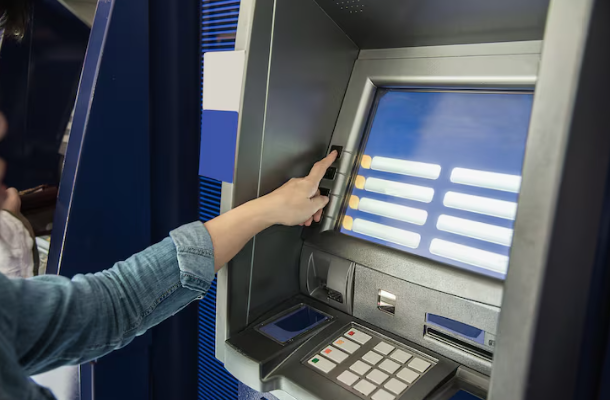
The settlement administrator, AB Data, Ltd., is sending out digital payments by email. Given how frequently financial scams use class action settlement wording as cover, Snopes’ investigation into the payouts after they started making the rounds on social media in early April 2026 revealed that the settlement is authentic and that the payments are real. The information is verified by court documents and the official settlement website. You should check your spam and promotional folders if you filed a legitimate claim but haven’t received an email yet. This is because digital payment notifications from senders you don’t know frequently wind up there. Not everyone will receive a message on the same day because payments are processed in waves rather than all at once.
Additionally, a second, distinct settlement is concurrently proceeding through the legal system. The $167.5 million case Burke v. Visa Inc. deals with customers who paid unreimbursed surcharges at independent, nonbank ATMs, which are freestanding devices found in corner stores, pubs, and gas stations as opposed to machines connected to banks. As part of the settlement, Visa and Mastercard have agreed to pay around $88.8 million and $78.7 million, respectively. Burke’s claims are scheduled to begin in 2026 once the court issues preliminary approval. When the Mackmin settlement is taken into account, the total for both lawsuits surpasses $430 million.
It’s difficult to avoid staring at the timeline for a while. It took fifteen years from the litigation until the settlement. accusations that date back to 2007. fees earned for a few dollars at a machine you only used once in a situation where you had no other viable option. The antitrust mechanisms underlying this lawsuit are the kind that seldom come to light in day-to-day life: regulations concealed within network agreements between large financial firms, influencing pricing at thousands of ATMs nationwide in ways that customers could not have been aware of or chosen not to participate in. The payments industry’s fundamental structure remains unchanged as a result of the settlement. Finally, however, part of the money that was overcharged is returned to the original payers.
