
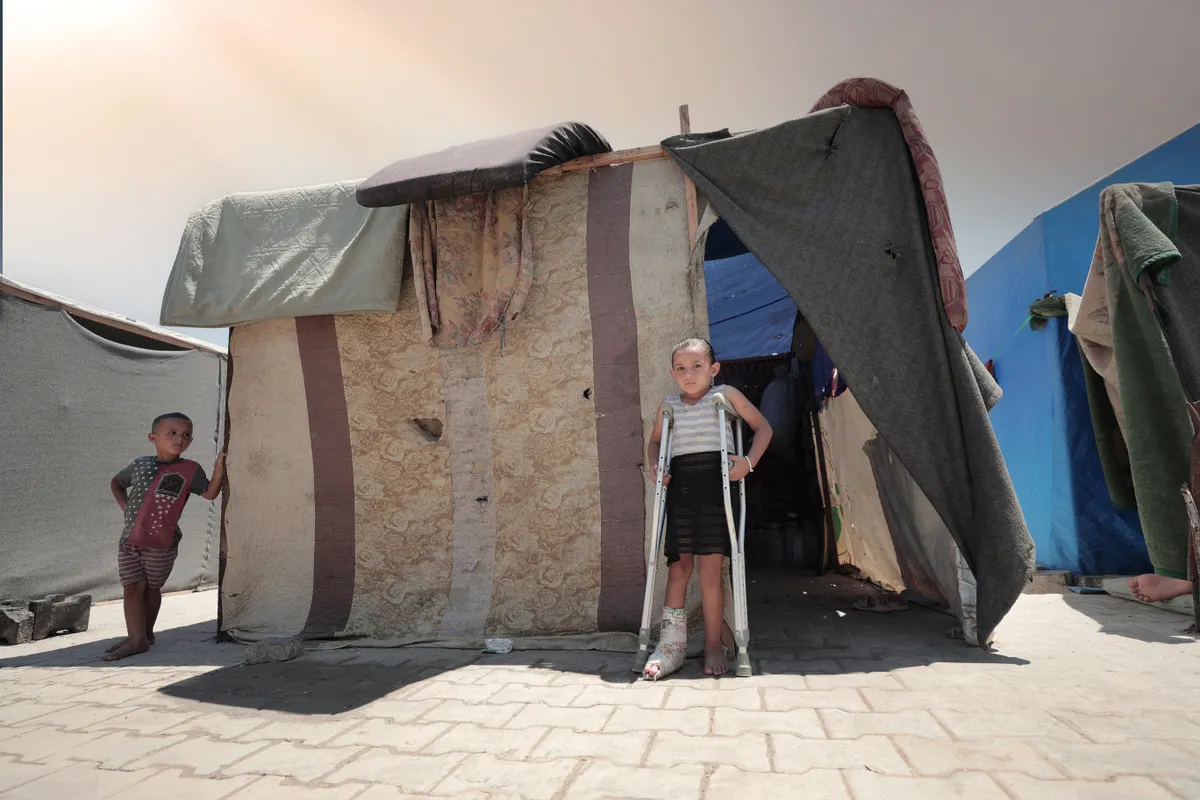

West Bank settler violence displaced more than 6,200 Palestinians, including over 3,000 children, between January 2023 and early July 2026, according to OCHA’s humanitarian situation report of 23 July 2026. That figure supersedes an earlier count of 5,900 cited for the period ending April 2026, covering a longer span as the displacement accelerated.
The 23 July report found that 123 Palestinian communities had experienced full or partial displacement, with 47 forcibly emptied entirely. In some cases, settlers subsequently established outposts on the vacated land.
West Bank Settler Violence: The Scale in Numbers
The pace of incidents in 2026 has been without precedent in recent years. OCHA’s 31 July 2026 report recorded more than 1,380 settler-related incidents since the start of the year, affecting over 250 Palestinian communities and averaging approximately 6.6 incidents per day. Around 900 Palestinians were injured in the context of settler attacks, accounting for more than half of all Palestinian injuries documented across the West Bank during that period.
Fatalities linked to settler attacks have also surpassed 2025 levels. By 20 July 2026, 18 Palestinians had been killed in such attacks, against 17 throughout all of 2025, according to the same OCHA report. Human Rights Watch, in a report published via ReliefWeb, documented that two attacks on Tal village near Nablus on 24 July 2026 killed four Palestinians and two Israelis. By 19 July, OCHA had already recorded 68 Palestinians killed in the West Bank in 2026, at least 13 of them by settlers.
The Jordan Valley has borne a disproportionate share. OCHA’s 16 July 2026 report found that displacement linked to settler attacks in the Jordan Valley accounted for more than half of all West Bank displacement recorded in 2026. Since January 2023, more than 2,000 Palestinians have been displaced in that region alone. The rate of settler attacks there resulting in casualties or property damage averaged 23 incidents per month as of 13 July 2026, compared with two per month in 2020.
The village of Jalud, south of Nablus, illustrates the pattern at household level. OCHA’s 31 July report documents that two Palestinian households comprising seven people, including three girls, were displaced in April 2026 following the establishment of an Israeli settler outpost near their homes and the takeover of a nearby Palestinian house. The case of Mahmoud Tubasi, who built his family home in Jalud approximately seven years ago on land owned by his family within Area B of the Oslo Accords framework, is one of many: after settlers set fire to the property in April and laid siege to the family, Tubasi and his relatives fled on 22 July.
Legal Precedent and the Failure of Government Response
Israeli law has, at least in principle, resisted some of the worst excesses. The Regularization Law, passed by the Knesset in February 2017, provided for the expropriation of private Palestinian land in the occupied West Bank where Israeli housing had been built without prior state authorisation. The Israeli Supreme Court struck it down in June 2020 by a majority of eight justices to one, finding it disproportionately violated Palestinians’ rights to property, equality and dignity. The sole dissenter was Justice Noam Sohlberg.
That ruling has not stopped displacement on the ground. What the court characterised as violations of property and dignity rights, as Lawyers for Palestinian Human Rights noted, continue through extra-legal settler action that the Netanyahu government’s coalition partners have shown little appetite to suppress. The Regularization Law was also known by a range of more pointed names, including the Land-grab Law and the Expropriation Law, which reflect the legal community’s view of its intent.
The displacement of Palestinian communities by force, on grounds of ethnic background alone, constitutes ethnic cleansing under any principled reading of that term. It also represents a systematic breach of private property rights, which are not contingent on nationality. The argument that settlers are merely asserting historic Jewish claims to the land cannot bear legal or moral scrutiny: the same territorial history that records Jewish presence over millennia also records centuries of Arab habitation. Neither group can claim the record as proof of exclusive entitlement.
US Ambassador to Israel Mike Huckabee has characterised the violent settlers as terrorists and called on the Israeli government to act. Whether the Netanyahu coalition, dependent on far-right parties that back the settler movement, will do so is the question on which Palestinian families in Jalud, the Jordan Valley, and dozens of other communities are waiting for an answer.
